
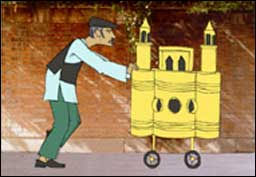
شهر شهرِ فرنگ ِ خوب تماشا کن 0079
Regardez notre ville! Notre ville est la belle ville de France
غزل
غزل[1] (به فارسی: غزل) گونهای از شعر عاشقانه یا قصیده [2]است که ریشه در شعر عربی دارد. غزل را میتوان بهعنوان بیان شاعرانهای از درد فقدان یا جدایی و زیبایی عشق، علیرغم آن درد، درک کرد. [3]
یک غزل معمولاً شامل پنج تا پانزده بیت است که هرچند مستقل هستند، اما از نظر موضوعی بهصورت انتزاعی و از نظر ساختار شعری بهطور دقیقتری به هم مرتبطاند. الزامات ساختاری غزل به همان اندازهٔ سونت پترارکی دقیق و سختگیرانه است. از نظر سبک و محتوا، به دلیل ماهیت بسیار کنایی آن، غزل توانسته است در چارچوب مضامین اصلی خود یعنی عشق و جدایی، طیف گستردهای از بیان را ارائه دهد.
غزل یکی از گستردهترین و محبوبترین قالبهای شعری است، بهویژه در خاورمیانه و جنوب آسیا. خوانش یا اجرای موسیقایی غزل در این کشورها حتی در میان عامه مردم نیز با استقبال روبهرو میشود. به شیوهای مشابه هایکو، غزل نیز در میان خوانندگان شعر در غرب در حال محبوب شدن است.
تلفظ
واژهٔ عربی غزل تقریباً مانند واژهٔ انگلیسی guzzle تلفظ میشود، اما با این تفاوت که حرف غ بدون انسداد کامل بین زبان و کام نرم ادا میشود. در زبان انگلیسی، این واژه بهصورت /[4]ˈɡʌzəl/ یا /ˈɡæzæl/ تلفظ میشود[5].
تاریخچه
خاستگاه در عربستان
غزل در قرن هفتم میلادی در عربستان شکل گرفت[6] و از قصیده، که قالبی بسیار قدیمیتر و پیشااسلامی در شعر عربی بود، تکامل یافت[7]. قصیدهها معمولاً اشعاری بسیار طولانی بودند که تا ۱۰۰ بیت نیز میرسیدند. از نظر موضوعی، قصیدهها به عشق نمیپرداختند و معمولاً مدح قبیله یا حاکم، هجویه یا پندهای اخلاقی بودند. با این حال، مقدمهٔ آغازین قصیده که نسیب نامیده میشد، معمولاً دارای مضامین نوستالژیک و/یا عاشقانه و از نظر سبک، بسیار آراسته و پرزرقوبرق بود. با گذشت زمان، نسیب بهصورت اشعاری مستقل و کوتاهتر نوشته شد که به غزل تبدیل شد[8].
غزل بهعنوان یک گونهٔ شعری مستقل در دورهٔ امویان (۶۶۱–۷۵۰ میلادی) به شکوفایی رسید و در اوایل دورهٔ عباسی به رشد و تکامل خود ادامه داد. غزل عربی ساختار وزنی رسمی قصیده را به ارث برد، بهویژه پایبندی دقیق به وزن عروضی و استفاده از قافیه، یعنی قافیهٔ مشترک در انتهای هر بیت (که در عربی بیت و در فارسی بیت یا شعر نامیده میشود).[9]
ماهیت غزل نیز برای تطابق با اجراهای موسیقایی تغییر کرد و کوتاهتر شد. وزنهای شعری سبکتری همچون خفیف، رمل و مقترب ترجیح داده شدند، درحالیکه وزنهای طولانیتر و سنگینتری که در قصیدهها رایج بودند، مانند کامل، بسیط و رجز، کمتر مورد استفاده قرار گرفتند. از نظر موضوعی نیز، تمرکز غزل از یادبودهای نوستالژیک وطن و عزیزان، به سمت مضامین عاشقانه یا شهوانی تغییر یافت. این تغییر شامل پیدایش زیرگونههایی با مضامینی مانند عشق درباری (عذری)، شهوانیت (حسّی)، همجنسگرایی مردانه (مذکر) و مقدمهای بسیار آراسته برای شعر بلندتر (تمهیدی) بود. [10]
گسترش غزل عربی
با گسترش اسلام، غزل عربی هم به سمت غرب، به آفریقا و اسپانیا، و هم به سمت شرق، به ایران گسترش یافت. معمولاً پیش از رواج غزل در یک منطقه، گسترش زبان عربی در آن کشور رخ میداد. در اسپانیای قرونوسطی، غزلهایی به زبان عبری و همچنین عربی یافت شده که قدمت آنها به قرن یازدهم میلادی بازمیگردد. این احتمال وجود دارد که غزلهایی نیز به زبان مستعربی (Mozarabic) نوشته شده باشند. علاوه بر این، غزلهایی به شکل عربی در چندین زبان ادبی مهم غرب آفریقا، مانند هوسه و فولفولده، نیز سروده شدهاند. [11]
ورود به ایران
غزلهای نخستین عربی-فارسی (قرن دهم تا یازدهم میلادی)
بااینحال، مهمترین تغییرات غزل زمانی رخ داد که این قالب شعری در قرن دهم میلادی[12] به ایران معرفی شد. غزلهای اولیهٔ فارسی عمدتاً از نظر مضامین و ساختار از غزل عربی تقلید میکردند. این غزلهای “عربی-فارسی” دو تفاوت اساسی با ریشههای عربی خود داشتند. نخست اینکه، در غزل فارسی از پیوستگی نحوی شدید بین دو مصراع یک بیت استفاده نمیشد، و دوم اینکه، در غزل فارسی، کاربرد قافیهٔ مشترک در هر دو مصراع بیت نخست (مطلع) [13] رسمیت یافت. تقلید از ساختارهای عربی در ایران شامل قصیده نیز میشد که در این سرزمین محبوبیت داشت.
به دلیل کوتاهی نسبی، تنوع موضوعی، و غنای القایی، غزل بهسرعت جایگاه قصیده را گرفت و محبوبترین قالب شعری در ایران شد[14]. همانند غزلهای عربی، غزلهای اولیهٔ فارسی نیز معمولاً از وزنهای موسیقاییتری نسبت به سایر قالبهای شعری فارسی استفاده میکردند. [15]رودکی (۸۵۸–۹۴۱ میلادی) مهمترین شاعر غزلسرای فارسی در این دوره بهشمار میرود و از او بهعنوان بنیانگذار ادبیات کلاسیک فارسی یاد میشود.
شعر غزل فارسی اولیه (قرن دوازدهم تا اوایل قرن سیزدهم میلادی)
غزل فارسی بین قرن دوازدهم و سیزدهم میلادی به شکل منحصربهفرد خود تحول یافت. بسیاری از این نوآوریها، همان قالبی را ایجاد کردند که امروزه بهعنوان غزل نمونهوار میشناسیم. این تغییرات در دو دوره رخ داد که با حمله مغول به ایران در سالهای ۱۲۱۹–۱۲۲۱ میلادی از یکدیگر جدا میشوند.
دورهٔ شعر فارسی اولیه تقریباً یک قرن را در بر میگیرد، از دوران غزنویان (که تا سال ۱۱۸۷ ادامه داشت) تا اندکی پس از حمله مغول. علاوه بر حرکت بهسوی ایجاز، این دوره شاهد دو تغییر مهم و ماندگار در قالب غزل بود.
نخستین تغییر، پذیرش تخلص بود، یعنی سنت ذکر نام قلمی شاعر در بیت پایانی (که مقطع نامیده میشود). پذیرش تخلص بهتدریج به بخشی پذیرفتهشده از ساختار غزل تبدیل شد و تا دوران سعدی شیرازی (۱۲۱۰–۱۲۹۱ میلادی)، مهمترین شاعر غزل این دوره، به یک قاعدهٔ الزامی تبدیل شده بود. [16]
دومین تغییر بارز نسبت به غزل عربی در غزل فارسی، حرکت بهسوی استقلال بسیار بیشتر بین ابیات بود.
شعر فارسی متأخر در دورهٔ آغازین مغول (از ۱۲۲۱ میلادی به بعد)
غزل بعدها در سراسر خاورمیانه و جنوب آسیا گسترش یافت. این قالب شعری در قرنهای هجدهم و نوزدهم در سراسر شبهقارهٔ هند به شهرت رسید.
ورود غزل به جنوب آسیا
غزل در قرن دوازدهم از طریق نفوذ عارفان صوفی و دربارهای سلطنتهای اسلامی به جنوب آسیا راه یافت. این دوره مصادف بود با آغاز سلطنتهای اسلامی در هند که در پی موج حملات اسلامی به این منطقه شکل گرفتند. شاعر و موسیقیدان قرن سیزدهم، امیرخسرو، بهعنوان اولین شاعر اردو شناخته میشود.
اگرچه غزل در درجهٔ نخست قالبی متعلق به شعر دری و شعر اردو است، اما امروزه در اشعار بسیاری از زبانهای شبهقارهٔ هند نیز یافت میشود.
قالب شعری
تمامی ابیات یک غزل از لحاظ وزنی هموزن هستند. در غزلها معمول است که نام شاعر (که تخلص نامیده میشود) در بیت پایانی ذکر شود؛ این سنت به مقطع معروف است.
مضامین
غزل در ابتدا صرفاً با مضمون مذهبی سروده میشد. اما امروزه، بیشتر به سمت مضامین عاشقانه گرایش دارد.
عشق مطلق و برتر
عشق در غزل معمولاً به دو گونه تفسیر میشود: عشقی الهی (نسبت به موجودی متعالی) یا عشقی زمینی (نسبت به معشوقی فانی). عشق همواره چیزی تلقی میشود که انسان را به تکامل میرساند و در صورت دستیابی، او را در صف حکیمان جای میدهد یا روح شاعر را به آرامش میکشاند. قوانین سنتی غزل ممکن است عنصر آشکار میل جنسی را دربر داشته باشد یا نداشته باشد، و عشق میتواند جنبهای عرفانی و معنوی داشته باشد. این عشق ممکن است به زن یا مرد معطوف باشد [17].
غزل همواره از دیدگاه عاشقی ناکام نوشته میشود که معشوق را دستنیافتنی به تصویر میکشد. در اکثر موارد، یا معشوق پاسخ عشق شاعر را نمیدهد، یا آن را با صداقت بازنمیگرداند، یا موانع اجتماعی مانع وصال آنها میشود. عاشق، با آگاهی و تسلیم در برابر این سرنوشت، همچنان به عشق خود ادامه میدهد؛ و کشش و نیروی غزل از همین تنش ناشی میشود.
تصویرپردازی از ناتوانی عاشق در برابر احساسات خود، اغلب شامل توصیفهای اغراقشدهای از رنج و خشونت شاعرانه است. قدرت معشوق در اسیر کردن دل شاعر ممکن است با استعارههای گستردهای بیان شود، مانند اشاره به “تیرهای چشمان معشوق” یا توصیف او با عناوینی چون “قاتل” و “جلاد”.
شاعران مهم غزل
غزلها توسط شاعران بزرگی چون رومی، حافظ و سعدی شیرازی از ایران؛ شاعر ترکی آذربایجانی فضولی در امپراتوری عثمانی؛ میرزاغالب و محمد اقبال از شمال هند؛ و قاضی نذرالاسلام از بنگال سروده شدهاند. از طریق تأثیر گوته (۱۷۴۹–۱۸۳۲)، غزل در قرن نوزدهم در آلمان محبوبیت زیادی پیدا کرد؛ این فرم به طور گستردهای توسط فردریش ریکرت (۱۷۸۸–۱۸۶۶) و آگوست فون پلاتن (۱۷۹۶–۱۸۳۵) استفاده شد. شاعر کشمیری آغا شاهید علی نیز از حامیان این فرم بود، هم به زبان انگلیسی و هم به زبانهای دیگر؛ او مجموعهای از “غزلهای واقعی به زبان انگلیسی” را ویرایش کرد. غزلهایی همچنین توسط موتی رام بهاتا (۱۸۶۶–۱۸۹۶)، پیشگام نوشتن غزل در نپالی، در زبان نپالی نوشته شدهاند[18]. غزلهایی نیز توسط حمزه شینواری نوشته شده است که به عنوان پدر غزلهای پشتو شناخته میشود. [19]
شاعران مهم غزل فارسی
در فارسی، شاعران برجسته و معروف غزل شامل حافظ، رومی، سعدی شیرازی، فخرالدین عراقی، خواجو کرمانی، صائب تبریزی، حسین منزوی، مریم جعفری آزرمندی، ولی محمد ولی، میرزاغالب، میرتقی میر، مومن خان مومن، داغ دهلوی، خواجه حیدرعلی آتیش، جاننثار اختر، خواجه میر درد، جون الیا، فیض احمد فیض، احمد فراز، فراق گورکھپوری / گوراکپوری Gorakhpuri، محمد اقبال، سید امین اشرف، قمر جلالآبادی، شاکب جلالی، ناصر کاظمی، ساحر لودھیانوی، حسرت موهانی، مَخدوم محیالدین، جگر مرادآبادی، ساغر صدیقی، منیر نیازی، میرزافراسی صعودا، قتیل شفائی شیفایی، مجروح سلطانپوری، دیشیانت کومار، سید وحید اشرف، محمد ابراهیم ذوق و کشمیری لال ذاکر.
ترجمهها و اجراهای غزل کلاسیک
مجموعههای عظیمی از غزل توسط صدها شاعر شناختهشده در طی هزار سال گذشته به زبانهای فارسی، ترکی، اردو و همچنین زبانهای ترکمنی آسیای مرکزی ایجاد شده است. اشعار غزل در شاشمقام ازبکی-تاجیکی، مقام ترکی، دستگاه فارسی و مقام اویغوری اجرا میشوند. ترجمههای متعددی از فارسی و ترکی توسط آنا ماری شیمل، آرتور جان آربی و بسیاری دیگر منتشر شده است.
غزل “گایاکی”، هنر خواندن یا اجرای غزل در سنت کلاسیک هندی، بسیار قدیمی است. خوانندگانی مانند استاد برکت علی و بسیاری دیگر از خوانندگان گذشته آن را تمرین میکردند، اما نبود سوابق تاریخی باعث شده است که بسیاری از نامها ناشناخته بمانند. این هنر با بگم اختر و سپس استاد مهدی حسن بود که اجرای کلاسیک غزلها در میان عموم مردم محبوب شد. دستهبندی خواندن غزل به عنوان یک نوع موسیقی “کلاسیک سبک” یک اشتباه است.
غزلهای کلاسیک به دلیل تغییرات در حالات مختلف “شعرها” یا بیتهای غزل دشوار به اجرا در میآیند. امانت علی خان، بگم اختر، طلال محمود، مهدی حسن، عابیده پروین، جگجیت سینگ، فریده خانم و استاد غلام علی، معینالدین احمد، از خوانندگان معروف غزل کلاسیک هستند.
محبوبیت
فهم اشعار پیچیده غزلها نیازمند آموزشی بود که معمولاً تنها در اختیار طبقات بالا قرار داشت. rāgaهای کلاسیک سنتی که اشعار در آنها اجرا میشد نیز سخت قابل درک بودند. غزل تغییراتی را در زمینه واژگان و عبارات تجربه کرده است که به آن کمک کرده تا به مخاطبان گستردهتری در سراسر جهان برسد. بیشتر غزلها اکنون به سبکهایی خوانده میشوند که محدود به خیال، تومری، راگا rāga، تالا tāla و دیگر ژانرهای کلاسیک و کلاسیک سبک نیستند.
با این حال، این فرمهای غزل از سوی پاکدلان سنت کلاسیک هندی مورد تحقیر قرار میگیرند. در پاکستان، نور جهان، اقبال بانو، عابیده پروین، فریده خانم، غلام علی، احمد رشدی، استاد امانت علی خان و مهدی حسن به دلیل اجراهای غزل شناخته شدهاند. خوانندگانی مانند جگجیت سینگ (که نخستین بار از گیتار در غزلها استفاده کرد)، احمد و محمد حسین، هریهاران، آدیتیا سرینیواسان، محمد رفیع، پانکاج اودهاس، ساتیام آناندجی و بسیاری دیگر توانستهاند با گنجاندن عناصر موسیقی غربی به غزل شکل جدیدی بدهند.
در شمال هند، علاوه بر هندوستانی، غزلها در زبان گجراتی نیز بسیار محبوب بودهاند. برای حدود یک قرن، از زمانی که بالاشانکار کانتهاریا آغاز کرد، نویسندگان معروف غزل گجراتی بسیاری مانند کلاپی، برکت ویرانی “بفام”، آسم راندهری، شونیا پالانپوری، امروت غایل، خلیل دهنتجیوی و بسیاری دیگر وجود داشتهاند. برخی از غزلهای برجسته این نویسندگان توسط خواننده معروف پخشخوان بالیوود، منهر اودهاس، خوانده شدهاند.
خواننده مشهور غزل و پیشگام غزل تلگو، غزل سرینواس، غزل را در تلگو محبوب کرد. سرینواس همچنین خواندن غزل به زبان کانادا را معرفی کرد و غزلهایی به زبان کانادا توسط مارکانداپورام سرینواس نوشته شدند.
اولین غزلهای صحیح به فرم بنگالی (بنگلا) در “گاجالِر آیانای” توسط بریتانیایی داشگاپتا منتشر شد.
خواننده غزل کلاسیک کانادایی، کاسیوس خان، دارای استعداد منحصر به فردی است که میتواند غزلها را در سبک قرائتی بخواند و همزمان خود را با تبلا همراهی کند.
به زبان انگلیسی
پس از تقریبا یک قرن از “شروعهای نادرست”، آزمایشهای اولیه جیمز کلارنس مانگان، جیمز الروی فلیکِر، آدریَن ریچ، فلیس وب و غیره، که بسیاری از آنها به طور کامل یا جزئی به اصول سنتی فرم وفادار نبودند و آزمایشهایی که به “غزل ناخالص” [20] معروف شده بودند، غزل بالاخره در اوایل تا میانه دهه 1990 به عنوان یک فرم بسته معتبر در شعر زبان انگلیسی شناخته شد. این امر عمدتاً به دلیل انتشار مثالهای واقعی و صحیح از غزلها توسط شاعران آمریکایی معروف چون جان هولندر، و. س. مرون و الیز پاسشن و همچنین شاعر کشمیری-آمریکایی آغا شاهید علی به وقوع پیوست که در دو دهه گذشته در دانشگاههای آمریکایی غزل را تدریس کرده و کلام آن را گسترش داده بودند. جیم هاریسون غزل آزاد خود را مطابق با چشمانداز شاعرانهاش در کتاب Outlyer and Ghazals (1971) خلق کرد. [21]
در سال 1996، آغا شاهید علی اولین مجموعه غزلهای زبان انگلیسی را گردآوری و ویرایش کرد که در سال 2000 توسط انتشارات دانشگاه وسلیان تحت عنوان Ravishing DisUnities: Real Ghazals in English منتشر شد. (کمتر از یک نفر از ده غزلهای گردآوری شده در Real Ghazals in English به طور کامل به محدودیتهای فرم غزل پایبند هستند.) دوی پانتی از نپال از سال 2006 شروع به سرودن غزلهایی کرد و خود را پیشگام غزلهای انگلیسی معرفی کرد. یک غزل از چندین بیت (پنج یا بیشتر) تشکیل میشود. این بیتها ممکن است هیچ ارتباطی با یکدیگر نداشته باشند به جز وحدت فرمی که از الگوی قافیه و وزن دقیق حاصل میشود. غزل به زبان انگلیسی به محدودیتهای سنتی فرم غزل پایبند است:
کجا هستی اکنون؟ چه کسی زیر طلسم توست امشب؟ چه کسی را از راه خوشی بیرون خواهی انداخت امشب؟
آن “پارچههای کشمیر—” “برای زیبا کردن من—” “زینت”— برای جواهر کردن من– چگونه– بگو– امشب؟
از تو پناه میخواهم: زندانها، درهای خود را باز کنید– یک پناهنده از ایمان به دنبال سلولی است امشب.
تنهایی شرابخداوند به سرکه تبدیل شده است– تمام فرشتگان مقرب– بالهایشان یخ زده– سقوط کردند امشب.
ای پروردگار، بتها فریاد زدند، ما را نشکن تنها ما میتوانیم کافر را تغییر دهیم امشب.
سقفهای مغولی، بگذار تا مقعرهای آینهای شما من را در یک آن زیر طلسم خود زیاد کنند امشب.
او آتشی از یخ آزاد کرده است به دلسوزی برای بهشت. برای خدا، درهای جهنم را باز گذاشته است امشب.
در معبد رگدار قلب، تمام مجسمهها شکسته شدهاند هیچ کشیشی در زعفران دیگر نیست تا ناقوس مرگش را به صدا درآورد امشب.
ای خدا، این مجازاتها را محدود کن، هنوز روز قیامت باقی است– من فقط یک گناهکارم، من کافر نیستم امشب.
جلادها نزدیک زن در پنجرهاند. لعنت بر تو ایلیاجا، من ایزابل را برکت میدهم امشب.
شکار تمام شده است و صدای اذان را میشنوم که به صدای غزال زخمی تبدیل میشود امشب.
رقبای من برای عشق تو– همه را دعوت کردهای؟ این توهین ساده است، این وداع نیست امشب.
و من، شاهید، تنها کسی هستم که فرار کرده تا بگویم به تو– خدا در آغوش من اشک میریزد. مرا اسماعیل بنام امشب [22]
Reference:
[1]- Wikipedia, Ghazal, retrieved 13.09.2017
[2]- “A dictionary of Urdu, classical Hindi, and English”. dsalsrv02.uchicago.edu. Retrieved 9 September 2018.
[3]- Poetry Foundation. 9 September 2018. Retrieved 9 September 2018.
[4]- Oxford BBC Guide to Pronunciation
[5]- Oxford English Dictionary
[6]- “Ghazal – Islamic literature”. Retrieved 9 September2018.
[7]- Kanda, K.C. (1992). Masterpieces of Urdu Ghazal from the 17th to the 20th Century. Sterling Publishing. p. 2. ISBN 8120711955.
[8]- Jalajel, David. “A Short History of the Ghazal”. The Ghazal Page Journal. Retrieved 26 August 2018.
[9]- Ibid.
[10]- Idem, and Dayf, Shawqî. Târîkh al-Adab al-Islâmî: 2 – al-`Asr al-Islâmî(A History of Arab Literature: 2- The Islamic Era). Cairo: Dâr al-Ma`ârif. 1963. (pp. 347–348)
[11]- Idem.
[12]- Kanda, K.C. (1992). Masterpieces of Urdu Ghazal from the 17th to the 20th Century. Sterling Publishing. p. 2. ISBN 8120711955.
[13]- Jalajel, David. Opcit.
[14]- Kanda, K.C. (1992). Masterpieces of Urdu Ghazal from the 17th to the 20th Century. Sterling Publishing. p. 2. ISBN 8120711955.
[15]- Jalajel, David. Opcit.
[16]- Idem.
[17]- Shayari Network.
[18]- “Hamza Sinwari Bhatta – We All Nepali”. http://www.weallnepali.com. Retrieved 2016-06-21.
[19]-“Hamza Shinwari”. en.wikipedia.org. Retrieved 2018-03-07.
[20]-“wordsters.net”. wordsters.net. Archived from the original on 12 January 2015. Retrieved 18 January 2015.
[21]- ISBN 0671208527
[22]- Agha Shahid Ali
Ghazal [1]
The Ghazal (Persian: غزل)Is a form of amatory poem or ode, [2] originating in Arabic poetry. A Ghazal may be understood as a poetic expression of both the pain of loss or separation and the beauty of love in spite of that pain [3].
A Ghazal commonly consists of between five and fifteen couplets, which are independent, but are linked – abstractly, in their theme; and more strictly in their poetic form. The structural requirements of the Ghazal are similar in stringency to those of the Petrarchan sonnet. In style and content, due to its highly allusive nature, the Ghazal has proved capable of an extraordinary variety of expression around its central themes of love and separation.
The Ghazal is one of the most widespread and popular poetic forms, especially across the Middle East and South Asia. Readings or musical renditions of Ghazals are well attended in these countries, even by the laity. In a similar manner to Haiku, the Ghazal is gaining popularity among Western poetry readers.
Pronunciation
The Arabic word ġazal is pronounced, roughly like the English word guzzle, but with the ġ pronounced without a complete closure between the tongue and the soft palate. In English, the word is pronounced /ˈɡʌzəl/ [4] or /ˈɡæzæl/ [5].
History
Origins in Arabia
The Ghazal originated in Arabia in the 7th century [6], evolving from the qasida, a much older pre-Islamic Arabic poetic form [7]. Qaṣīdas were typically much longer poems, with up to 100 couplets. Thematically, qaṣīdas did not include love and were usually panegyrics for a tribe or ruler, lampoons, or moral maxims. However, the qaṣīda’s opening prelude, called the nasīb, was typically nostalgic and/or romantic in theme, and highly ornamented and stylized in form. In time, the nasīb began to be written as standalone, shorter poems, which became the Ghazal [8].
The Ghazal came into its own as a poetic genre during the Ummayyad Era (661–750) and continued to flower and develop in the early Abbasid Era. The Arabic Ghazal inherited the formal verse structure of the qaṣīda, specifically, a strict adherence to meter and the use of the Qaafiyaa, a common end rhyme on each couplet (called a bayt in Arabic and a sher in Persian) [9].
The nature of the Ghazals also changed to meet the demands of musical presentation, becoming briefer in length. Lighter poetic meters, such as khafîf, ramal, and muqtarab were preferred, instead of longer, more ponderous meters favored for qaṣīdas (such as kâmil, basît, and rajaz). Topically, the Ghazal focus also changed from nostalgic reminisces of the homeland and loved ones, towards romantic or erotic themes – These included sub-genres with themes of courtly love (udharî), eroticism (hissî), homoeroticism (mudhakkar), and as a highly stylized introduction to a larger poem (tamhîdî) [10].
Spread of the Arabian Ghazal
With the spread of Islam, the Arabian Ghazal spread both westwards, into Africa and Spain, as well as eastwards, into Persia. The popularity of Ghazals in a particular region was usually preceded by the spread of the Arabic language in that country. In medieval Spain, Ghazals written in Hebrew as well as Arabic have been found as far back as the 11th century. It is possible that Ghazals were also written in the Mozarabic language. Ghazals in the Arabic form have also been written in a number of major West African literary languages like Hausa and Fulfulde [11].
Dispersion into Persia
Early Arabo-Persian Ghazals (10th to 11th century)
However, the most significant changes to the Ghazal occurred in its introduction into Iran in the 10th century [12]. The early Persian Ghazals largely imitated the themes and forms of the Arabian Ghazal. These “Arabo-Persian” Ghazals introduced two differences compared to their Arabian poetic roots. Firstly, the Persian Ghazals did not employ radical enjambment between the two halves of the couplet, and secondly, the Persian Ghazals formalized the use of the common rhyme in both lines of the opening couplet (“matla”) [13]. The imitation of Arabian forms in Persia extended to the qaṣīda, which was also popular in Persia.
Because of its comparative brevity, thematic variety, and suggestive richness, the Ghazal soon eclipsed the qaṣīda and became the most popular poetry form in Persia [14]. Much like Arabian Ghazals, early Persian Ghazals typically employed more musical meters compared to other Persian poetry forms [15]. Rudaki (858–941 CE) is considered the most important Persian Ghazal poet of this period, and the founder of classical Persian literature.
Early Persian Ghazal poetry (12th to early 13th century)
The Persian Ghazal evolved into its own distinctive form between the 12th and 13th centuries. Many of those innovations created what we now recognize as the archetypical Ghazal form. These changes occurred in two periods, separated by the Mongol Invasion of Persia from 1219–1221 AD.
The ‘Early Persian poetry’ period spanned approximately one century, from the Ghaznavid era (which lasted until 1187) till a little after the Mongol Invasion. Apart from the movement towards brevity, this period also saw two significant and lasting changes to the Ghazal form.
The first change was the adoption of the Takhallus, the practice of mentioning the poet’s pen name in the final couplet (called the ‘maqta’). The adoption of the takhallus became a gradually accepted part of the Ghazal form, and by the time of Saadi Shirazi (1210–1291 AD), the most important Ghazal poet of this period, it had become de rigueur [16]. The second marked change from the Arabian Ghazal form in Persian Ghazals was a movement towards far greater autonomy between the couplets.
Late Persian poetry in the Early Mongol Period (1221–)
The Ghazal later spread throughout the Middle East and South Asia. It was famous all around the Indian subcontinent in the 18th and 19th centuries.
Introduction into South Asia
The Ghazal was spread from Persia into South Asia in the 12th century by the influence of Sufi mystics and the courts of the new Islamic sultanates. This period coincided with the early Islamic Sultanates in India, through the wave of Islamic invasions into the region in that period. The 13th century poet and musician Ameer Khusrow is considered the first Urdu poet.
Although the Ghazal is most prominently a form of Dari and Urdu poetry, it is now found in the poetry of many languages on the Indian subcontinent.
Poetic form
All the lines of a Ghazal have the same meter. It is common in Ghazals for the poet’s name (known as takhallus) to be featured in the last verse (a convention known as the maqta).
Themes
The Ghazal was initially composed to a purely religious theme. Now it is more likely to lean towards romantic themes.
Unconditional, superior love
Can usually be interpreted for a higher being or for a mortal beloved. Love is always viewed as something that will complete a human being, and if attained will lift him or her into the ranks of the wise, or will bring satisfaction to the soul of the poet. Traditional Ghazal law may or may not have an explicit element of sexual desire in it, and the love may be spiritual. The love may be directed to either a man or a woman [17].
The Ghazal is always written from the point of view of the unrequited lover whose beloved is portrayed as unattainable. Most often, either the beloved has not returned the poet’s love or returns it without sincerity or else the societal circumstances do not allow it. The lover is aware and resigned to this fate but continues loving nonetheless; the lyrical impetus of the poem derives from this tension. Representations of the lover’s powerlessness to resist his feelings often include lyrically exaggerated violence. The beloved’s power to captivate the speaker may be represented in extended metaphors about the “arrows of his eyes”, or by referring to the beloved as an assassin or a killer.
Important Ghazal poets
Ghazals were composed by Rumi, Hafiz and Saadi Shirazi of Persia; the Azerbaijani Turkish poet Fuzûlî in the Ottoman Empire; Mirza Ghalib and Muhammad Iqbal of North India; and Kazi Nazrul Islam of Bengal. Through the influence of Goethe (1749–1832), the Ghazal became very popular in Germany during the 19th century; the form was used extensively by Friedrich Rückert (1788–1866) and August von Platen(1796–1835). The Kashmiri poet Agha Shahid Ali was a proponent of the form, both in English and in other languages; he edited a volume of “real Ghazals in English”. Ghazals were also written by Moti Ram Bhatta (1866–1896), the pioneer of Nepali Ghazal writing in Nepali [18]. Ghazals were also written by Hamza Shinwari, He is known as the father of Pashto Ghazals [19].
Important poets of Persian Ghazal
In Persian, prominent and acclaimed Ghazal poets include Hafiz, Rumi, Saadi Shirazi, Fakhr-al-Din Iraqi, Khwaju Kermani, Saib Tabrizi, Hossein Monzavi, Maryam Jafari Azarmani, Wali Mohammed Wali, Mirza Ghalib, Mir Taqi Mir, Momin Khan Momin, Daagh Dehlvi, Khwaja Haidar Ali Aatish, Jan Nisar Akhtar, Khwaja Mir Dard, Jaun Elia, Faiz Ahmad Faiz, Ahmad Faraz, Firaq Gorakhpuri, Muhammad Iqbal, Syed Amin Ashraf, Qamar Jalalabadi, Shakeb Jalali, Nasir Kazmi, Sahir Ludhianvi, Hasrat Mohani, Makhdoom Mohiuddin, Jigar Moradabadi, Saghar Siddiqui, Munir Niazi, Mirza Rafi Sauda, Qateel Shifai, Majrooh Sultanpuri, Dushyant Kumar, Syed Waheed Ashraf, Muhammad Ibrahim Zauq and Kashmiri Lal Zakir.
Translations and performance of classical Ghazal
Enormous collections of Ghazal have been created by hundreds of well-known poets over the past thousand years in Persian, Turkish, and Urdu as well as in the Central Asian Turkic languages. Ghazal poems are performed in Uzbek-Tajik Shashmakom, Turkish Makam, Persian Dastgah and Uyghur Muqam. There are many published translations from Persian and Turkish by Annemarie Schimmel, Arthur John Arberry and many others.
Ghazal “Gayaki”, the art of singing or performing the Ghazal in the Indian classical tradition, is very old. Singers like Ustad Barkat Ali and many other singers in the past used to practice it, but the lack of historical records make many names anonymous. It was with Begum Akhtar and later on Ustad Mehdi Hassan that classical rendering of Ghazals became popular in the masses. The categorization of Ghazal singing as a form of “light classical” music is a misconception.
Classical Ghazals are difficult to render because of the varying moods of the “shers” or couplets in the Ghazal. Amanat Ali Khan, Begum Akhtar, Talat Mahmood, Mehdi Hassan, Abida Parveen, Jagjit Singh, Farida Khanum and Ustad Ghulam Ali, Moinuddin Ahamed, are popular classical Ghazal singers.
Popularity
Understanding the complex lyrics of Ghazals required education typically available only to the upper classes. The traditional classical rāgas in which the lyrics were rendered were also difficult to understand. The Ghazal has undergone some simplification in terms of words and phrasings, which helps it to reach a larger audience around the world. Most of the Ghazals are now sung in styles that are not limited to khayāl, thumri, rāga, tāla and other classical and light classical genres.
However, those forms of the Ghazal are looked down on by purists of the Indian classical tradition. In Pakistan, Noor Jehan, Iqbal Bano, Abida Parveen, Farida Khanum, Ghulam Ali, Ahmed Rushdi, Ustad Amanat Ali Khan and Mehdi Hassan are known for Ghazal renditions. Singers like Jagjit Singh (who first used a guitar in Ghazals), Ahmed and Mohammed Hussain, Hariharan, Adithya Srinivasan, Muhammad Rafi, Pankaj Udhas, Satyam Anandjee and many others have been able to give a new shape to the Ghazal by incorporating elements of Western music.
In North India, in addition to Hindustani, Ghazals have been very popular in the Gujarati language. For around a century, starting with Balashankar Kantharia, there have been many notable Gujarati Ghazal writers like Kalapi, Barkat Virani ‘Befaam’, Aasim Randeri, Shunya Palanpuri, Amrut Ghayal, Khalil Dhantejvi and many more. Some notable Ghazals of those prominent writers have been sung by Bollywood playback singer Manhar Udhas.
Renowned Ghazal singer, and pioneer of Telugu Ghazals, Ghazal Srinivas popularized the Ghazal in Telugu. Srinivas also introduced Ghazal singing in Kannada, and Ghazals in Kannada were written by Markandapuram Srinivas.
The first true-to-form Bangla (Bengali) Ghazal are published in “gajaler aayanaay” by British Dashgupta.
The Canadian classical Ghazal singer Cassius Khan has the unusual talent of singing in the recitational style while accompanying himself on the tabla.
In English
After nearly a century of “false starts”, the early experiments of James Clarence Mangan, James Elroy Flecker, Adrienne Rich, Phyllis Webb, etc., many of whom did not adhere wholly or in part to the traditional principles of the form, experiments dubbed as “the bastard Ghazal” [20], the Ghazal finally began to be recognized as a viable closed form in poetry of the English language some time in the early to mid-1990s. It came about largely as a result of serious, true-to-form examples being published by noted American poets John Hollander, W. S. Merwin and Elise Paschen as well as by Kashmiri-American poet Agha Shahid Ali, who had been teaching and spreading word of the Ghazal at American universities over the previous two decades. Jim Harrison created his own free-form Ghazal true to his poetic vision in Outlyer and Ghazals (1971) [21].
In 1996, Ali compiled and edited the world’s first anthology of English-language Ghazals, published by Wesleyan University Press in 2000, as Ravishing DisUnities: Real Ghazals in English. (Fewer than one in ten of the Ghazals collected in Real Ghazals in English observe the constraints of the form.) Devi Panthi of Nepal started composing Ghazals claiming himself the pioneer of English Ghazals since 2006.
A Ghazal is composed of couplets, five or more. The couplets may have nothing to do with one another except for the formal unity derived from a strict rhyme and rhythm pattern.
A Ghazal in English observes the traditional restrictions of the form:
Where are you now? Who lies beneath your spell tonight?
Whom else from rapture’s road will you expel tonight?
Those “Fabrics of Cashmere—” “to make Me beautiful—”
“Trinket”— to gem– “Me to adorn– How– tell”— tonight?
I beg for haven: Prisons, let open your gates–
A refugee from Belief seeks a cell tonight.
God’s vintage loneliness has turned to vinegar–
All the archangels– their wings frozen– fell tonight.
Lord, cried out the idols, Don’t let us be broken
Only we can convert the infidel tonight.
Mughal ceilings, let your mirrored convexities
multiply me at once under your spell tonight.
He’s freed some fire from ice in pity for Heaven.
He’s left open– for God– the doors of Hell tonight.
In the heart’s veined temple, all statues have been smashed
No priest in saffron’s left to toll its knell tonight
God, limit these punishments, there’s still Judgment Day–
I’m a mere sinner, I’m no infidel tonight.
Executioners near the woman at the window.
Damn you, Elijah, I’ll bless Jezebel tonight.
The hunt is over, and I hear the Call to Prayer
fade into that of the wounded gazelle tonight.
My rivals for your love– you’ve invited them all?
This is mere insult, this is no farewell tonight.
And I, Shahid, only am escaped to tell thee–
God sobs in my arms. Call me Ishmael tonight [22].
Notable poets who composed Ghazals
Adrienne Rich, Ghazals: Homage to Ghalib
Agha Shahid Ali, “Ghazal (‘…exiles’)”
Andrew D. Chumbley, “Qutub” (Xoanon), 1995.
Edward Lowbury, “A Ghazel (for Pauline)” (1968); “Prometheus: a ghazel” (1976); “Remembering Nine (a ghazel for Peter Russell)” (1981)
Eleanor Wilner, “Ghazal on What’s to Lose, or Not”
Elise Paschen, “Sam’s Ghazal”
Francis Brabazon, In Dust I Sing (Beguine Library, 1974).
Galway Kinnell, “Sheffield Ghazal 4: Driving West”, “Sheffield Ghazal 5: Passing the Cemetery” (Mariner Books), 2001
Jim Harrison, Outlyer, and Ghazals (Touchstone), 1971
John Edgar Wideman, “Lost Letter”
John Hollander, “Ghazal On Ghazals”
John Thompson, “Stilt Jack” (Anansi), 1978.
Judith Fitzgerald, Twenty-Six Ways Out of This World (Oberon), 1999.
Lorna Crozier, “Bones in Their Wings”
Marilyn Krysl, “Ghazals for the Turn of the Century”
Maxine Kumin, “On the Table”
Natasha Trethewey, “Miscegenation”, 2006.
Phyllis Webb, Water, and Light: Ghazals and Anti Ghazals (Coach House), 1984.
Rob Winger, “The Chimney Stone” (Nightwood Editions), 2010
Robert Bly, The Night Abraham Called to the Stars and My Sentence Was a Thousand Years of Joy
Robert Pinsky, “The Hall”
Spencer Reece, Florida Ghazals
Sukhdarshan Dhaliwal, “Ghazals at Twilight” (SD Publications), 2009
Thomas Hardy, “The Mother Mourns”
W. S. Merwin, “The Causeway”
William Matthews, “Guzzle”, “Drizzle”
 ADABSARA