
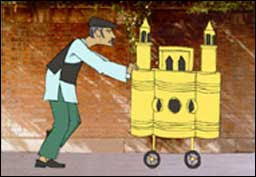
شهر شهرِ فرنگ ِ خوب تماشا کن 0075
Regardez notre ville! Notre ville est la belle ville de France
موسیقی سنتی ایرانی
موسیقی سنتی ایرانی، که با نامهای موسیقی کلاسیک ایرانی یا موسیقی اصیل ایرانی نیز شناخته میشود، به موسیقی کلاسیک ایران[1] اشاره دارد. این موسیقی شامل ویژگیهایی است که در دورههای کلاسیک، قرون وسطایی و معاصر ایران توسعه یافتهاند[2].
به دلیل تبادل دانش موسیقایی در طول تاریخ، بسیاری از نغمهها و مقامهای موسیقی کلاسیک ایران با موسیقی فرهنگهای همجوار کنونی ارتباط دارند[3].
کارکرد و جایگاه اجتماعی
موسیقی هنری کلاسیک ایران همچنان مانند گذشته بهعنوان ابزاری معنوی عمل میکند و کمتر جنبه تفریحی دارد. این موسیقی بیشتر متعلق به نخبگان اجتماعی است، در حالی که موسیقی فولکلور و عامهپسند توسط تمامی اقشار جامعه تجربه میشود. با این حال، عناصر موسیقی کلاسیک ایرانی در آهنگهای فولکلور و پاپ نیز گنجانده شدهاند[4].
تاریخچه
تاریخ رشد و تکامل موسیقی در ایران به هزاران سال پیش بازمیگردد. اسناد باستانشناسی مربوط به تمدنهای “پیشاایرانی”، مانند ایلام در جنوب غربی و تمدن آمودریا در شمال شرقی، نشاندهنده سنتهای موسیقایی در دوران پیشاتاریخی هستند[5].
درباره موسیقی امپراتوریهای باستانی ایران، همچون مادها، هخامنشیان و اشکانیان، اطلاعات کمی در دست است. بااینحال، مدارک پراکندهای که از دربار[6]، تئاترهای عمومی[7]، آیینهای مذهبی و آمادگیهای جنگی باقی ماندهاند، صحنهای غنی از موسیقی را به تصویر میکشند[8]. در اساطیر ایرانی، جمشید بهعنوان “مخترع” موسیقی شناخته میشود[9].
تاریخ موسیقی دوره ساسانی بهتر از دورههای پیشین ثبت شده است. در این دوره، نامهای سازها و موسیقیدانان درباری بهوضوح ذکر شدهاند. در دوران ساسانی، موسیقی مقامی توسط باربد، شاعر و موسیقیدان مشهور دربار، توسعه یافت[10].
او که در بسیاری از منابع از او یاد شده است، ممکن است ساز عود را اختراع کرده و بنیانگذار سنت موسیقاییای باشد که بعدها به دستگاهها و مقامهای موسیقی ایرانی تبدیل شد. به او نسبت داده شده که سیستمی متشکل از هفت “مقام سلطنتی” (خسروانی)، ۳۰ مقام فرعی[11] (نوا)، و ۳۶۰ نغمه (داستان) را تنظیم کرده است. [12]
موسیقی آکادمیک کلاسیک ایران، علاوه بر حفظ نغمههای منسوب به موسیقیدانان ساسانی، مبتنی بر نظریههای زیباییشناسی صوتی دانشمندانی همچون ابنسینا، فارابی، قطبالدین شیرازی و صفیالدین ارموی در قرون اولیه پس از فتح ایران توسط اعراب است. این موسیقی همچنین با موسیقی دوره صفوی (قرن ۱۶-۱۸) پیوند دارد. در دوران قاجار (قرن ۱۹)، ملودیهای کلاسیک ایرانی گسترش یافتند و درعینحال، اصول و فناوریهای نوین غربی وارد موسیقی ایران شدند[13].
میرزا عبدالله، استاد برجسته تار و سهتار و یکی از محترمترین موسیقیدانان دربار قاجار، تأثیر عمیقی بر آموزش موسیقی کلاسیک ایران در کنسرواتوارها و دانشگاههای معاصر ایران گذاشت. ردیف، که او در قرن ۱۹ تدوین کرد، قدیمیترین نسخه ثبتشده از سیستم هفت دستگاهی است و بهعنوان بازآرایی سیستم ۱۲ مقامی قدیمیتر شناخته میشود[14].
در دوران قاجار و اوایل پهلوی، تعداد زیادی قطعه موسیقایی در چارچوب مقامهای کلاسیک ایرانی ساخته شدند که بسیاری از آنها تلفیقی از هارمونیهای موسیقی غربی بودند[15].
نفوذ موسیقی غربی در اوایل دوران معاصر با انتقاد سنتگرایان مواجه شد، زیرا آنها احساس میکردند که موسیقی سنتی در معرض خطر نابودی قرار دارد. تا پیش از دهه ۱۹۵۰، موسیقیدانان کلاسیک همچنان بر صنعت موسیقی ایران تسلط داشتند. [16]
در سال ۱۹۶۸، داریوش صفوت و نورعلی برومند مؤسسهای به نام “مرکز حفظ و اشاعه موسیقی ایرانی” را تأسیس کردند، که نقش مهمی در احیای موسیقی سنتی در دهه ۱۹۷۰ ایفا کرد.
در سال ۲۰۰۹، “ردیف موسیقی ایرانی” بهعنوان “گنجینه سنتی موسیقی کلاسیک ایران” در فهرست میراث فرهنگی ناملموس یونسکو ثبت شد[17].
ویژگیها
موسیقی هنری کلاسیک ایران بر بداههنوازی و آهنگسازی متکی است و بر پایه مجموعهای از مقیاسهای مقامی و نغمههای ملودیک قرار دارد[18]. قطعات اجرا شده معمولاً بین بخشهای تأملی آرام و نمایشهای چالاک از مهارت نوازندگی (تحریر) در نوسان هستند.
این موسیقی شامل بیش از ۲۰۰ گوشه (حرکات ملودیک کوتاه) است که در هفت دستگاه طبقهبندی میشوند. دو دستگاه از این مجموعه دارای زیرشاخههایی به نام آواز هستند. مجموع این ساختار ردیف نام دارد که نسخههای متعددی از آن، بر اساس آموزشهای اساتید مختلف (استادان) موجود است.
در پایان دوره صفوی، الگوهای ریتمیک پیچیدهتر که شامل ۱۰، ۱۴ و ۱۶ ضرب بودند، کنار گذاشته شدند. در اوایل دوره قاجار، چرخههای ریتمیک (اصول) جای خود را به میزانهایی بر اساس قالب غزل دادند، و سیستم مقامی بازآرایی شد تا به سیستم ردیف تبدیل شود.
امروزه، قطعات ریتمیک معمولاً در میزانهای ۲ تا ۷ ضرب اجرا میشوند، با برخی استثنائات. قطعات رِنگ همیشه در میزان ۶/۸ اجرا میشوند.
یک اجرای معمول موسیقی کلاسیک ایرانی شامل پنج بخش است:
۱. پیشدرآمد (قطعهای متریک و آهنگین بهعنوان مقدمه)،
۲. چهارمضراب (قطعهای سریع و متریک با الگوی ریتمیک تکرارشونده)،
۳. آواز (بخش اصلی و بداهه)،
۴. تصنیف (آهنگی متریک همراه با شعر کلاسیک)،
۵. رنگ (قطعهای ریتمیک برای خاتمه اجرا). [19]
یک اجرا به نوعی یک سوئیت موسیقایی را تشکیل میدهد. بهطور غیرمتعارف، این بخشها ممکن است تغییر کرده یا حذف شوند.
موسیقی کلاسیک ایرانی عمدتاً بر پایه آواز است و خواننده نقش کلیدی دارد، زیرا او تصمیم میگیرد چه حالتی را بیان کند و کدام دستگاه با آن حال و هوا متناسب است. در بسیاری از موارد، انتخاب اشعار نیز بر عهده خواننده است. اگر اجرا شامل خواننده باشد، او معمولاً با حداقل یک ساز بادی یا زهی و یک ساز کوبهای همراهی میشود. در برخی تصنیفها، نوازندگان ممکن است با خواننده همخوانی کنند.
استفاده از متون مذهبی بهعنوان شعر در موسیقی کلاسیک ایرانی تا حد زیادی با اشعار عرفانی شاعران قرون میانه، بهویژه حافظ و مولانا، جایگزین شده است.
سازها
سازهای بومی ایرانی که در موسیقی سنتی به کار میروند شامل سازهای زهی مانند چنگ (هارپ)، قانون، سنتور، رود (عود، بربط)، تار، دوتار، سهتار، تنبور و کمانچه، سازهای بادی مانند سرنا (زُرنا، کرنا)، نی و نیانبان، و سازهای کوبهای مانند تنبک، کوس، دف (دایره)، نقاره و دهل هستند.
برخی سازها مانند سرنا، نیانبان، دهل و نقاره معمولاً در رپرتوار کلاسیک استفاده نمیشوند، اما در موسیقی فولکلور کاربرد دارند. تا اواسط دوران صفوی، چنگ بخش مهمی از موسیقی ایران بود، اما سپس با قانون (زیتر) جایگزین شد و بعدها پیانوی غربی جای آن را گرفت.
تار، ساز زهی اصلی در اجراهای موسیقی کلاسیک ایرانی است. سهتار بهویژه در میان موسیقیدانان صوفی محبوب است. ویولن غربی نیز با کوک خاصی که نوازندگان ایرانی ترجیح میدهند، استفاده میشود. قیچک، که نوعی کمانچه است، پس از سالها کنار گذاشته شدن، دوباره به موسیقی کلاسیک ایرانی بازگردانده شده است.
برای مطالعه بیشتر مراجعه نمایید. احمد شه وری. دانشنامه موسیقی. 5 جلد.
Persian traditional music
Persian traditional music or Iranian traditional music, also known as Persian classical music or Iranian classical music[20], refers to the classical music of Iran. It consists of characteristics developed through the country’s classical, medieval, and contemporary eras[21].
Due to the exchange of musical science throughout history, many of Iran’s classical melodies and modes are related to those of its now neighboring cultures[22] .
Iran’s classical art music continues to function as a spiritual tool, as it has throughout history, and much less of a recreational activity. It belongs for the most part to the social elite, as opposed to the folkloric and popular music, in which the society as a whole participates. However, the parameters of Iran’s classical music have also been incorporated into folk and pop music compositions[23].
History
The history of musical development in Iran dates back thousands of years. Archaeological records attributed to “pre-Iranian” civilizations, such as those of Elam in the southwest and of Oxus in the northeast, demonstrate musical traditions in the prehistoric times[24] .
Little is known about the music of the classical Iranian empires of the Medes, the Achaemenids, and the Parthians. However, an elaborate musical scene is revealed through various fragmentary documents, including those that were observed at the court[25] and in public theaters[26] and those that accompanied religious rituals and battle preparations[27]. Jamshid, a king in Iranian mythology, is credited with the “invention” of music[28].
The history of Sassanian music is better documented than the earlier periods, and the names of various instruments and court musicians from the reign of the Sassanians have been attested.
Under the Sassanian rule, modal music was developed by a highly celebrated poet-musician of the court named Barbad, who is remembered in many documents[29]. He may have invented the lute and the musical tradition that was to transform into the forms of dastgah and maqam. He has been credited to have organized a musical system consisting of seven “royal modes” (xosrovāni), 30 derived modes (navā) [30], and 360 melodies (dāstān) [31].
Iran’s academic classical music, in addition to preserving melody types attributed to Sassanian musicians, is based on the theories of sonic aesthetics as expounded by the likes of Iranian musical theorists in the early centuries of after the Arabs’ conquest of the Sassanian Empire, most notably Avicenna, Farabi, Qotb-ed-Din Shirazi, and Safi-ed-Din Urmawi. It is also linked directly to the music of the 16th–18th-century Safavid dynasty. Under the reign of the 19th-century Qajar dynasty, the classical melody types were developed, alongside the introduction of modern technologies and principles from the West[32].
Mirza Abdollah, a prominent tar and setar master and one of the most respected musicians of the court of the Qajar period, is considered a major influence on the teaching of classical Iranian music in Iran’s contemporary conservatories and universities. Radif, the repertoire that he developed in the 19th century, is the oldest documented version of the seven dastgah system and is regarded as a rearrangement of the older 12 maqam system[33].
During the Qajar and the early Pahlavi periods, numerous musical compositions were produced within the parameters of classical Iranian modes, and many involved Western musical harmonies[34].
The introduction and popularity of Western musical influences in the early contemporary era were criticized by traditionalists, who felt that traditional music was becoming endangered. It was prior to the 1950s that Iran’s music industry was dominated by classical musicians[35].
In 1968, Dariush Safvat and Nur-Ali Borumand helped form an institution called the Center for Preservation and Propagation of Iranian Music, an act that is credited with saving traditional music in the 1970s.
The “Radif of Iranian music” was officially inscribed on the UNESCO Representative List of the Intangible Cultural Heritage of Humanity in 2009, described as “the traditional repertoire of the classical music of Iran”[36] .
Characteristics
Iran’s classical art music relies on both
improvisation and composition, and is based on a series of modal scales and tunes[37]. Compositions can vary immensely from start to finish, usually alternating between low, contemplative pieces and athletic displays of musicianship called Tahrir. The common repertoire consists of more than 200 short melodic motions (guše), which are classified into seven modes (dastgāh). Two of these modes have secondary modes branching from them that are called āvāz. This whole body is called radif, of which there are several versions, each in accordance with the teachings of a particular master (ostād).
By the end of the Safavid dynasty, more complex musical movements in 10, 14, and 16 beats stopped being performed.
In the early Qajar era, the rhythmic cycles (osul) were replaced by a meter based on the ghazal, and the maqam system of classification was reconstructed into the radif system. Today, rhythmic pieces are performed in beats of 2 to 7, with some exceptions. The reng are always in a 6/8 time frame.
A typical Iranian classical performance consists of five parts, namely pišdarāmad (“prelude”; a composed metric piece), čahārmezrāb (a fast, metric piece with a repeated rhythmic pattern), āvāz (the improvised central piece), tasnif (a composed metric song of classical poetry), and reng (a rhythmic closing composition) [38]. A performance forms a sort of suit. Unconventionally, these parts may be varied or omitted.
Iran’s classical art music is vocal-based, and the vocalist plays a crucial role, as he or she decides what mood to express and which dastgah relates to that mood. In many cases, the vocalist is also responsible for choosing the lyrics. If the performance requires a singer, the singer is accompanied by at least one wind or string instrument, and at least one type of percussion. There could be an ensemble of instruments, though the primary vocalist must maintain his or her role. In some tasnif songs, the musicians may accompany the singer by singing along several verses.
The incorporation of religious texts as lyrics has largely been replaced by the works of medieval Sufi poets, especially Hafiz and Rumi.
Instruments
Indigenous Iranian musical instruments used in the traditional music include string instruments such as the chang (harp), qanun, santurk the chang (harp), qanun, santur, rud (oud, barbat), tar, dotar, setar, ta-nbur, and kamanche, wind instruments such as the sorna (zurna, Karna), ney, and neyanban, and percussion instruments such as the tompak, kus, daf (dayere), naqare, and dohol.
Some instruments, such as the sorna, neyanban, dohol, and naqare, are usually not used in the classical repertoire but are used in folk music. Up until the middle of the Safavid dynasty, the change was an important part of Iranian music. It was then replaced by the qanun (zither), and later by the western piano. The tar functions as the primary string instrument in a performance. The setar is especially common among Sufi musicians. The Western violin is also used, with an alternative tuning preferred by Iranian musicians. The ghaychak, which is a type of fiddle, is being re-introduced to classical music after many years of exclusion.
[1] – Bithell, Caroline; Hill, Juniper (2014). The Oxford Handbook of Music Revival. Oxford University Press. p. 277. and Koen, Benjamin; Lloyd, Jacqueline; Barz, Gregory; Brummel-Smith, Karen (2011). The Oxford Handbook of Medical Ethnomusicology. Oxford University Press. p. 362. and Tsuge, Gen’ichi (1991). Āvāz: A Study of the Rhythmic Aspects in Classical Iranian Music. University Microfilms.
[2] – “IRAN xi. MUSIC”. Encyclopædia Iranica. XIII. 30 March 2012. pp. 474–480.
[3] – For further readings please refer to Ahmad Shahvary, Encyclopedia of Music, volumes 1-5.
[4] – Encyclopædia Iranica. XIII. 30 March 2012. pp. 474–480.
[5] – Lawergren, Bo (2016). “MUSIC HISTORY”. Encyclopaedia Iranica (online ed.).
[6] – Lawergren, Bo (2016). “MUSIC HISTORY”. Encyclopaedia Iranica (online ed.). and Encyclopædia Iranica. VII. 18 November 2011. pp. 102–103.
[7] – Encyclopædia Iranica. Xi. 17 February 2012. pp. 167–170.
[8] – Lawergren, Bo (2016). “MUSIC HISTORY”. Encyclopaedia Iranica (online ed.).
[9] – Farhat, Hormoz (2012). “An Introduction to Persian Music” (PDF). Catalogue of the Festival of Oriental Music. University of Durham.
[10] – Encyclopædia Iranica. III. 15 December 1988. pp. 757–758.
[11] – “ČAKĀVAK”. Encyclopædia Iranica. IV. 15 December 1990. pp. 649–650. (Pers. navā, Ar. laḥn, naḡma, etc.)
[12] – Lawergren, Bo (2016). “MUSIC HISTORY”. Encyclopaedia Iranica (online ed.).
[13] – “IRAN xi. MUSIC”. Encyclopædia Iranica. XIII. 30 March 2012. pp. 474–480.
[14] – “ABDALLĀH, MĪRZĀ”. Encyclopædia Iranica (online ed.). 21 January 2014.
[15] – “ḴĀLEQI, RUḤ-ALLĀH”. Encyclopædia Iranica. XV. 19 April 2012. pp. 377–380.
[16] – Saba, Sadeq (26 November 2003). “Obituary: Vigen Derderian”. The Guardian. London.
[17] – Intangible Cultural Heritage – Unesco. Retrieved 28 May 2018. and “نوروز جهانی شد” [“Nowruz Became International”]. BBC Persian (in Persian). 30 September 2009.
[18] – “BADĪHA-SARĀʾĪ”. Encyclopædia Iranica. III. 22 August 2011. pp. 379–380.
[19] – “IRAN xi. MUSIC”. Encyclopædia Iranica. XIII. 30 March 2012. pp. 474–480.
[20] – Bithell, Caroline; Hill, Juniper (2014). The Oxford Handbook of Music Revival. Oxford University Press. p. 277. and Koen, Benjamin; Lloyd, Jacqueline; Barz, Gregory; Brummel-Smith, Karen (2011). The Oxford Handbook of Medical Ethnomusicology. Oxford University Press. p. 362. and Tsuge, Gen’ichi (1991). Āvāz: A Study of the Rhythmic Aspects in Classical Iranian Music. University Microfilms.
[21] – “IRAN xi. MUSIC”. Encyclopædia Iranica. XIII. 30 March 2012. pp. 474–480.
[22] – For further readings please refer to Ahmad Shahvary, Encyclopedia of Music, volumes 1-5.
[23] – Encyclopædia Iranica. XIII. 30 March 2012. pp. 474–480.
[24] – Lawergren, Bo (2016). “MUSIC HISTORY”. Encyclopaedia Iranica (online ed.).
[25] – Lawergren, Bo (2016). “MUSIC HISTORY”. Encyclopaedia Iranica (online ed.). and Encyclopædia Iranica. VII. 18 November 2011. pp. 102–103.
[26] – Encyclopædia Iranica. Xi. 17 February 2012. pp. 167–170.
[27] – Lawergren, Bo (2016). “MUSIC HISTORY”. Encyclopaedia Iranica (online ed.).
[28] – Farhat, Hormoz (2012). “An Introduction to Persian Music” (PDF). Catalogue of the Festival of Oriental Music. University of Durham.
[29] – Encyclopædia Iranica. III. 15 December 1988. pp. 757–758.
[30] – “ČAKĀVAK”. Encyclopædia Iranica. IV. 15 December 1990. pp. 649–650. (Pers. navā, Ar. laḥn, naḡma, etc.)
[31] – Lawergren, Bo (2016). “MUSIC HISTORY”. Encyclopaedia Iranica (online ed.).
[32] – “IRAN xi. MUSIC”. Encyclopædia Iranica. XIII. 30 March 2012. pp. 474–480.
[33] – “ABDALLĀH, MĪRZĀ”. Encyclopædia Iranica (online ed.). 21 January 2014.
[34] – “ḴĀLEQI, RUḤ-ALLĀH”. Encyclopædia Iranica. XV. 19 April 2012. pp. 377–380.
[35] – Saba, Sadeq (26 November 2003). “Obituary: Vigen Derderian”. The Guardian. London.
[36] – Intangible Cultural Heritage – Unesco. Retrieved 28 May 2018. and “نوروز جهانی شد” [“Nowruz Became International”]. BBC Persian (in Persian). 30 September 2009.
[37] – “BADĪHA-SARĀʾĪ”. Encyclopædia Iranica. III. 22 August 2011. pp. 379–380.
[38] – “IRAN xi. MUSIC”. Encyclopædia Iranica. XIII. 30 March 2012. pp. 474–480.
 ADABSARA