
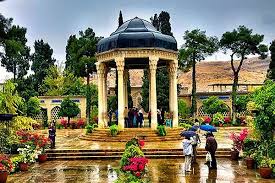
حافظیه
آرامگاه حافظ و تالار یادبود آن، حافظیه، دو بنای یادبود هستند که در شمال شیراز، ایران، به یاد شاعر بزرگ فارسی، حافظ، ساخته شدهاند. این سازههای روباز در باغهای مصلا، در ساحل شمالی یک رودخانه فصلی قرار دارند و آرامگاه مرمرین حافظ را در خود جای دادهاند. ساختمانهای کنونی در سال ۱۹۳۵ میلادی ساخته شده و توسط معمار و باستانشناس فرانسوی، آندره گدار، طراحی شدهاند. این بناها در محل سازههای پیشین ساخته شدهاند که شناختهشدهترین آنها در سال ۱۷۷۳ بنا شده بود. آرامگاه، باغهای آن و یادبودهای اطراف، که به دیگر بزرگان اختصاص دارند، از جاذبههای گردشگری شیراز به شمار میروند.
تاریخچه
حافظ در سال ۱۳۱۵ میلادی در شیراز به دنیا آمد و در سال ۱۳۹۰ در همانجا درگذشت. او چهرهای محبوب در میان مردم ایران بود، که بسیاری از اشعارش را از بر داشتند. حافظ در زادگاه خود از جایگاه والایی برخوردار بود و عنوان شاعر دربار را داشت. در سال ۱۴۵۲ میلادی، به دستور بابر ابن بایسنقر، از فرمانداران تیموری، بنایی گنبدیشکل کوچک در نزدیکی آرامگاه او در گلگشت مصلا در شیراز ساخته شد.
باغهای گلگشت مصلا (که اکنون به باغهای مصلا شناخته میشوند) در اشعار حافظ جایگاهی ویژه داشتند. این باغها با وسعتی بیش از ۱۹٬۰۰۰ متر مربع، محل یکی از گورستانهای شیراز نیز بودند و بابر در کنار بنای یادبود، استخری نیز در این محل بنا کرد. شاه عباس صفوی و نادرشاه افشار، با باور به نشانههای موجود در اشعار حافظ، طی ۳۰۰ سال پس از آن، پروژههای مرمتی جداگانهای را در این محل انجام دادند.
در سال ۱۷۷۳ میلادی، در دوران حکومت کریمخان زند، یادبودی بسیار بزرگتر در این باغها ساخته شد. این بنا که در ساحل شمالی رودخانه فصلی رودخانه خشک در باغهای مصلا قرار داشت، از چهار ستون مرکزی تشکیل شده بود و دو اتاق در دو سوی شرقی و غربی آن ساخته شده بود، در حالی که اضلاع شمالی و جنوبی آن باز بودند. این ساختمان باغها را به دو بخش تقسیم میکرد، به طوری که نارنجستان در بخش جلو و قبرستان در بخش عقب قرار داشت. مقبره اصلی در خارج از این بنا و در وسط قبرستان قرار داشت و روی آن سنگ مرمری قرار داده شده بود که کتیبهای از اشعار حافظ به خط خوش بر آن حک شده بود.
در سال ۱۸۵۷، این مقبره توسط یکی از حکام فارس مرمت شد و در سال ۱۸۷۸، فرماندار دیگری از فارس، حصاری چوبی در اطراف آن بنا کرد. پس از آن، این مکان به موضوعی مناقشهبرانگیز تبدیل شد، زیرا در سال ۱۸۹۹، شخصی پارسی از هند به نام اردشیر، شروع به ساخت زیارتگاهی بر روی آرامگاه حافظ کرد. هرچند که این نیکوکار پارسی، اجازه ساخت این بنا را از یکی از علمای شیراز دریافت کرده بود، اما یکی از فقهای برجسته، علیاکبر فالاسیری، با این اقدام مخالفت کرد و با پیروانش، بنای نیمهساختهشده را ویران کرد. مردم شیراز نسبت به این تخریب اعتراض کردند و دولت دستور بازسازی بنا را صادر کرد، اما فالاسیری با این کار مخالفت کرد و اعلام کرد که اگر حتی خود شاه هم این بنا را بسازد، او دوباره آن را ویران خواهد کرد.
این مکان دو سال در ویرانی باقی ماند تا اینکه در سال ۱۹۰۱، شاهزاده ملک منصور میرزا شعاعالسلطنه، حصاری آهنین و تزئینی را دور مقبره حافظ قرار داد که بر آن، ابیاتی حک شده و نام بانیان این یادبود ذکر شده بود.
ساختار کنونی
فعالیتهای بازسازی و گسترش آرامگاه حافظ در سال ۱۹۳۱ آغاز شد، زمانی که نارنجستان مرمت شد و تغییراتی در حافظیه، به دستور فرجالله بهرامی دبیر اعظم، والی فارس و اصفهان، اعمال شد.
بهبودهای بیشتر تا سال ۱۹۳۵ به تأخیر افتاد، تا اینکه وزارت معارف تصمیم به ساخت بنای جدید گرفت. در آن زمان، آندره گدار، باستانشناس و معمار فرانسوی، مدیر فنی اداره عتیقات بود و مأمور طراحی بناهای جدید شد. با این حال، برخی منابع طراحی این سازه را به ماکسیم گیرو نسبت میدهند.
تغییرات اعمالشده در مقبره حافظ شامل بالا بردن آن به میزان یک متر از سطح زمین و احاطه کردن آن با پنج پله بود. هشت ستون، هر یک به ارتفاع ده متر، گنبدی مسی را که به شکل کلاه درویشان است، نگه میدارند. قسمت زیرین گنبد با موزاییکهای رنگارنگ و طرحهای اسلیمی تزئین شده است.
تالار یادبود اولیه، که در سال ۱۷۷۳ توسط کریمخان زند با چهار ستون ساخته شده بود، بهطور گستردهای گسترش یافت. شانزده ستون دیگر به چهار ستون اصلی اضافه شد و ایوانی طولانی را ایجاد کرد. بر روی چندین نمای ساختمان، غزلها و دیگر اشعار حافظ حکاکی شده است.
باغها و گردشگری
چندین حوض مستطیلشکل به باغها افزوده شده و درختان نارنج، مسیرهای سنگفرششده، جویبارها و باغچههای گل، فضایی دلپذیر را برای آرامگاه و تالار یادبود حافظ ایجاد کردهاند. یک چایخانه در این محوطه، پذیرایی را در فضایی سنتی ارائه میدهد. گنبدی که بر فراز مقبره حافظ قرار دارد، در شب بهخوبی نورپردازی شده و به نقطهای جذاب تبدیل شده است.
آرامگاه پیشین قاسمخان والی اکنون به کتابخانهای با ۱۰٬۰۰۰ جلد کتاب اختصاصیافته به مطالعات حافظشناسی تبدیل شده است[1].
Hafiziyeh
The Tomb of Hafiz and its associated memorial hall, the Hafizieh (حافظیه), are two memorial structures erected on the northern edge of Shiraz, Iran, in memory of the celebrated Persian poet Hafiz. The open pavilion structures are situated in the Musalla Gardens on the north bank of a seasonal river and house the marble tomb of Hafiz. The present buildings, built in 1935 and designed by the French architect and archaeologist André Godard, are at the site of previous structures, the best-known of which was built in 1773. The tomb, its gardens, and the surrounding memorials to other great figures are a focus of tourism in Shiraz.
History
Hafiz was born in Shiraz in 1315 and died there in 1390. A beloved figure of the Iranian people, who learned his verses by heart, Hafiz was prominent in his hometown and held a position as the court poet. In his memory, a small, dome-like structure was erected in Shiraz near his grave at Golgast-e Mosalla in 1452 at the order of Babur Ibn-Baysunkur, a Timuridgovernor. The Golgast-e Mosalla were gardens (now known as Musalla Gardens) that featured in Hafiz’s poetry. With a surface of over 19,000 square meters, the gardens were also home to one of Shiraz’s cemeteries, and Babur had a pool built here at the same time as the memorial. Believing they were ordered by omens in Hafiz’s poetry, Abbas I of Persia and Nader Shah both carried out separate restoration projects in the following 300 years.
A much more substantial memorial was constructed in the gardens in 1773 during the reign of Karim Khan Zand. Situated on the north bank of the seasonal Rudkhaneye Khoshk River in the Musalla Gardens, the Hafizieh consisted of four central columns, with two rooms built at the east and west end and with the north and south sides remaining open. The building split the gardens into two regions, with the orange grove in the front and the cemetery in the back. The actual tomb was outside of the structure, in the middle of the cemetery, with a marble slab placed over the grave. The marble was engraved by a calligrapher with excerpts from Hafiz’s poetry.
The tomb was restored in 1857 by a governor of Fars, and a wooden enclosure was built around the tomb in 1878, by another governor of Fars. Following this, the site became a subject of controversy, when, in 1899, Ardeshir, a Parsi from India began to build a shrine around Hafiz’s grave. Although the philanthropist Parsi had obtained permission from a ulema of Shiraz to build the iron and wood shrine, a doctor of religious law with some authority in Shiraz, Ali-Akbar Fāl-Asiri, objected to a Zoroastrian building over the grave of a Muslim. With his followers, he destroyed the half-built construction. The people of Shiraz protested the destruction and the government ordered the rebuilding of the monument, but Fāl-Asiri opposed them and pronounced that he would destroy any building raised there, even if it were erected by the king himself.
The site remained in ruins for two years, until 1901 when Prince Malek Mansur Mirza Shao es-Saltaneh placed a decorative iron transenna around Hafiz’s tomb. It was inscribed with verse and the names of the patrons of the transient.
Present structure
Activities to restore and expand the memorial to Hafiz began in 1931 when the orange grove was repaired and the Hafizieh was altered by a governor of Fars and Isfahan, Faraj-Allāh Bahrāmi Dabir-e Azam.
Additional improvements were delayed until the Ministry of Education organized for a new building to be built, in 1935. André Godard, a French archaeologist and architect, was the technical director of the Department of Antiquities at the time and was commissioned to design the new buildings. Other sources however attribute the design to Maxime Giroux.
Alterations to Hafiz’s tomb involved elevating it one meter above ground level and encircling it with five steps. Eight columns, each ten meters tall, support a copper dome in the shape of a dervish hat. The underside of the dome is an arabesque and colorful mosaic.
The original, four-columned memorial hall built in 1773 by Karim Khan Zand was extensively expanded. Sixteen pillars were added to the four originals, creating a long verandah, and on several façades are engraved ghazals and other excerpts from Hafiz’s poetry.
Gardens and tourism
Several rectangular pools have been added to the gardens, and well-maintained orange trees, paths, streams, and flower beds create a pleasant environment for the tourism hub of Hafiz’s tomb and memorial hall. A tea house on the grounds provides refreshments in a traditional setting. The dome over Hafiz’s grave is well-lit at night, providing an attractive focal point. The former tomb of Qāsem Khan Wāli is now a library containing 10,000 volumes dedicated to Hafiz scholarship.
Hafiziyeh
Le tombeau de Hafez et son pavillon commémoratif, appelés Hafiziyeh (حافظیه), sont deux structures mémorielles érigées au nord de Chiraz, en Iran, en mémoire du célèbre poète persan Hafez. Ces pavillons ouverts sont situés dans les jardins de Musalla, sur la rive nord d’une rivière saisonnière, et abritent la tombe de marbre de Hafez. Les bâtiments actuels, construits en 1935 et conçus par l’architecte et archéologue français André Godard, se trouvent à l’emplacement d’anciennes structures, dont la plus connue a été édifiée en 1773. Le tombeau, ses jardins et les monuments commémoratifs avoisinants dédiés à d’autres grandes figures constituent un centre d’attraction touristique à Chiraz.
Histoire
Hafez est né à Chiraz en 1315 et y est décédé en 1390. Il était une figure très aimée du peuple iranien, qui apprenait ses vers par cœur. Poète de renom dans sa ville natale, il occupait une place prestigieuse en tant que poète de cour. En 1452, un petit mausolée en forme de dôme fut érigé près de sa tombe à Golgast-e Mosalla à Chiraz, sur ordre de Babur Ibn-Baysunkur, un gouverneur timouride.
Les jardins de Golgast-e Mosalla (aujourd’hui connus sous le nom de jardins de Musalla) occupaient une place importante dans la poésie de Hafez. Couvrant plus de 19 000 mètres carrés, ces jardins abritaient également l’un des cimetières de Chiraz. Babur y fit construire un bassin en même temps que le mémorial. Convaincus que des présages apparaissaient dans la poésie de Hafez, Abbas Ier de Perse et Nader Shah entreprirent chacun des restaurations distinctes au cours des 300 années suivantes.
Un monument beaucoup plus imposant fut construit dans les jardins en 1773, sous le règne de Karim Khan Zand. Situé sur la rive nord de la rivière saisonnière Rudkhaneh-ye Khoshk, dans les jardins de Musalla, le Hafiziyeh était composé de quatre colonnes centrales, avec deux pièces à l’est et à l’ouest, tandis que les côtés nord et sud restaient ouverts. Le bâtiment divisait les jardins en deux parties : une orangeraie à l’avant et un cimetière à l’arrière. La tombe elle-même se trouvait à l’extérieur de la structure, au centre du cimetière, recouverte d’une dalle de marbre sur laquelle étaient gravés des extraits de la poésie de Hafez par un calligraphe.
En 1857, la tombe fut restaurée par un gouverneur de Fars et en 1878, un autre gouverneur y fit construire une enceinte en bois. Plus tard, en 1899, le site devint une source de controverse lorsque Ardeshir, un Parsi indien, tenta de bâtir un sanctuaire autour de la tombe de Hafez. Bien que le bienfaiteur parsi ait obtenu l’autorisation d’un religieux de Chiraz, un jurisconsulte influent, Ali-Akbar Fāl-Asiri, s’opposa à cette initiative, affirmant qu’un zoroastrien ne pouvait pas construire un édifice sur la tombe d’un musulman. Avec ses partisans, il détruisit la construction à moitié achevée.
Les habitants de Chiraz protestèrent contre cette destruction et le gouvernement ordonna la reconstruction du monument. Cependant, Fāl-Asiri s’opposa fermement à tout édifice sur cette tombe, affirmant qu’il le détruirait à nouveau, même si c’était le roi lui-même qui le faisait construire.
Le site resta en ruines pendant deux ans, jusqu’en 1901, lorsque le prince Malek Mansur Mirza Shoa es-Saltaneh fit installer une grille en fer décoratif autour de la tombe de Hafez, ornée de vers et des noms des mécènes de ce mémorial temporaire.
Structure actuelle
Les travaux de restauration et d’agrandissement du mémorial de Hafez ont commencé en 1931, lorsque l’orangerie a été restaurée et que des modifications ont été apportées au Hafiziyeh sous l’ordre de Faraj-Allāh Bahrāmi Dabir-e Azam, gouverneur de Fars et d’Ispahan.
D’autres améliorations furent retardées jusqu’à ce que le ministère de l’Éducation organise la construction d’un nouveau bâtiment en 1935. André Godard, archéologue et architecte français, était alors le directeur technique du Département des Antiquités et fut chargé de concevoir les nouveaux bâtiments. Cependant, certaines sources attribuent la conception à Maxime Giroux.
Les modifications apportées à la tombe de Hafez consistaient à l’élever d’un mètre au-dessus du niveau du sol et à l’entourer de cinq marches. Huit colonnes, chacune de dix mètres de haut, soutiennent un dôme en cuivre en forme de chapeau de derviche. Le dessous du dôme est décoré de mosaïques colorées et d’arabesques.
Le pavillon commémoratif original, construit en 1773 par Karim Khan Zand avec quatre colonnes, a été considérablement agrandi. Seize colonnes supplémentaires ont été ajoutées aux quatre originales, créant une longue véranda. Sur plusieurs façades sont gravés des ghazals et d’autres extraits de la poésie de Hafez.
Jardins et tourisme
Plusieurs bassins rectangulaires ont été ajoutés aux jardins, et les orangers bien entretenus, les allées, les ruisseaux et les parterres de fleurs créent un cadre agréable pour ce site touristique dédié à la tombe et au mémorial de Hafez. Une maison de thé sur le site offre des rafraîchissements dans un cadre traditionnel.
Le dôme sur la tombe de Hafez est bien éclairé la nuit, créant un point focal attrayant. L’ancien mausolée de Qāsem Khan Wāli est désormais une bibliothèque contenant 10 000 volumes consacrés aux études sur Hafez.
[1] – Kamali Sarvestani, Kuros (2003). “xiv. Hafiz’s Tomb (Hafiziya)”. Encyclopaedia Iranica Online. 11. http://www.iranicaonline.org. Retrieved 2009-06-12.
 ADABSARA