
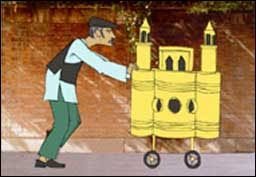
شهر شهرِ فرنگ ِ خوب تماشا کن 0070
Regardez notre ville! Notre ville est la belle ville de France
گردآورنده دیوان حافظ
مولانا شمسالدین محمد گلندام، که دیوان حافظ را گردآوری کرده است، شاعر و نویسندهای در نیمه دوم قرن هشتم هجری و نیمه اول قرن نهم هجری بوده است. او اهل شیراز بوده، به این معنا که خود و والدینش در شیراز متولد شدهاند. وی همدرس حافظ بوده است.
ما امروزه یک قصیده به نام او در اختیار داریم که وی آن را در مدح ابوالفتح سلطان ابراهیم، پسر شاهرخ تیموری، حاکم کل فارس سروده است.
طبق گفته سید محمدرضا جلال نائینی در کتاب “سخن اهل دل” (صفحات ۲۳۰-۲۳۱)، این قصیده که در ۴۲ بیت سروده شده و پیشتر متعلق به جعفر سلطانالغرایی، یک تبریزی بوده، اکنون در کتابخانه مجلس در بهارستان در تهران نگهداری میشود.
محمد گلندام بسیار به حافظ نزدیک بوده و او را بهخوبی میشناخته است. چنانکه در متن اصلی این کتاب ذکر شده، در مقدمه دیوان ادعا کرده که اگرچه بسیاری از دوستان نزدیک حافظ از او خواسته بودند که دیوانش را تدوین کند، حافظ با این بهانه که مشغله زیادی دارد، این کار را در طول زندگی خود انجام نداد. ازاینرو گلندام، که خود شاعری آگاه به ارزش ادبی آثار حافظ بود، تصمیم به گردآوری اشعار او در قالب دیوان گرفت.
تا قرن گذشته، هیچکس در اینکه دیوان حافظ توسط محمد گلندام گردآوری شده است، تردیدی نداشت، مگر علامه محمد قزوینی و چند پژوهشگر دیگر که این موضوع را رد کردند. اما مرحوم استاد محیط طباطبایی با تحقیقات عمیق خود بار دیگر این حقیقت را اثبات کرد و برای نخستین بار یافتههای خود را در یک برنامه رادیویی در سال ۱۳۴۹/۱۹۷۰ که بهطور هفتگی تحت عنوان “مرزهای دانش” پخش میشد، اعلام کرد. این برنامه سالها توسط مرحوم استاد محیط طباطبایی تهیه و اجرا میشد. او دوباره در سال ۱۳۵۰/۱۹۷۱، یافتههای خود درباره محمد گلندام را در کنگره حافظ و سعدی که در شیراز برگزار شد، ارائه کرد.
Mawlana Shams ed-Din Muhammad Gulandam, who gathered the Divan-i Hafiz, was a poet and writer of the second half of the eighth century after Hegirat and the first half of the ninth century. He was a Shirazi, which means he and his parents were born in Shiraz. He was a fellow student of Hafiz. We now have a Ghassideh in his name that he composed to eulogize Abu al-Fath Sultan Ibrahim, the son of Shah-rukh of Timurids, the General Governor of Fars.
According to the Seyed Muhammad Reza Jallal Na`eini (Sokhan-i Ahle Del: 230-231), this Ghassideh which is composed of 42 verses and previously belonged to Ja`far Sultan al-Gharaei, a Tabrizi fellow, now is kept in Majlis Library in Baharestan, Tehran.
Gulandam was very close to Hafiz and knew him very well and as it is mentioned in the main text of this book, in Introductory Note of Divan he has claimed that though many of Hafiz’s close friends had asked him to edit his Divan, Hafiz by this pretext that he is too busy to do that, did not do it in his life and so Gulandam who was a poet and knew very well that how important are the literary works of Hafiz, collected his works in the Divan.
Till the last century nobody had any doubt that the Divan of Hafiz had been collected by Muhammad Gulandam save Allameh Muhammad Ghazvini and a few other scholars who deny it. But the late Ostad Mohit Tabatabaei by his deep studies proved this fact again and for the first time he announced his findings in a radio program in 1970/1349 which was broadcasting weekly under the name of the “Borders of Knowledge/ Marzhayeh Danesh”, a program which was prepared and performed by the late Ostad Mohit Tabatabaei for many years. He again presented his findings about Muhammad Gulandam in 1971 at the Hafiz and Sa`di Congress which was held in Shiraz.
Mawlana Shams ed-Din Muhammad Gulandam, qui a rassemblé le Divan de Hafez, était un poète et écrivain de la seconde moitié du VIIIe siècle de l’Hégire et de la première moitié du IXe siècle. Il était originaire de Chiraz, ce qui signifie que lui et ses parents y sont nés. Il était condisciple de Hafez.
Nous possédons aujourd’hui une qasida en son nom, qu’il a composée pour faire l’éloge d’Abu al-Fath Sultan Ibrahim, fils de Shahrukh des Timourides, gouverneur général du Fars.
Selon Seyed Muhammad Reza Jallal Na’eini (dans “Sokhan-i Ahle Del”, pages 230-231), cette qasida, composée de 42 vers, appartenait auparavant à Ja`far Sultan al-Gharaei, un compagnon de Tabriz, et elle est maintenant conservée à la bibliothèque du Parlement à Baharestan, Téhéran.
Gulandam était très proche de Hafez et le connaissait très bien. Comme mentionné dans le texte principal de ce livre, dans l’introduction du Divan, il a affirmé que bien que de nombreux amis proches de Hafez lui aient demandé d’éditer son Divan, Hafez refusa avec le prétexte qu’il était trop occupé pour le faire. Par conséquent, Gulandam, étant lui-même un poète conscient de la valeur littéraire des œuvres de Hafez, a pris l’initiative de les rassembler dans le Divan.
Jusqu’au siècle dernier, personne ne doutait que le Divan de Hafez avait été compilé par Muhammad Gulandam, à l’exception d’Allameh Muhammad Ghazvini et de quelques autres chercheurs, qui ont nié ce fait. Mais feu Ostad Mohit Tabatabaei, grâce à ses recherches approfondies, a prouvé à nouveau cette réalité et a annoncé ses conclusions pour la première fois dans une émission radiophonique en 1970 (1349), diffusée chaque semaine sous le nom de “Les Frontières du Savoir / Marzha-ye Danesh”, une émission qu’il a préparée et animée pendant de nombreuses années.
Il a de nouveau présenté ses découvertes sur Muhammad Gulandam en 1971 (1350) lors du Congrès Hafez et Sa`di qui s’est tenu à Chiraz.
 ADABSARA