
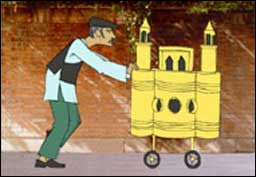
شهر شهرِ فرنگ ِ خوب تماشا کن 0068
Regardez notre ville! Notre ville est la belle ville de France
ممدوحین حافظ
ابواسحاق اینجو
شاه شیخ جمالالدین ابواسحاق اینجو در سال 1321 م به دنیا آمد. او از سال 1342 تا 1357 بر استان فارس حکومت کرد تا اینکه به دست مزدوران امیر مبارزالدین به قتل رسید. گفته میشود که مردی خوشچهره، خوشخو و خوشرفتار با اهل علم و هنر بود، هرچند که اهل عیش و نوش و فردی عهدشکن نیز به شمار میرفت.
او علاقه زیادی به شاعران داشت و خود نیز شاعر بود، ازاینرو احترام ویژهای برای خواجه حافظ قائل بود، تا جایی که آرامترین و خوشترین دوران زندگی حافظ در عهد این پادشاه سپری شد. مردم اصفهان و شیراز او را بسیار دوست داشتند، هرچند که حامیان اصلیاش در اصفهان بودند و در واقع، او نسبت به مردم شیراز نگرانیهایی داشت، زیرا اجازه حمل سلاح را به آنان نمیداد.
شرفالدین ابوعبدالله ابوسعید، معروف به ابن بطوطه، که در سال 1344 م در شیراز بوده است، نوشته که او سیهزار نیروی ایرانی و ترک در اختیار داشته است. خواجه حافظ او را شاهِ مشکینکاکل نامیده است. حافظ در مدح او چنین سروده است:
یاد باد آنکه سرکوی توام منزل بود
دیده را روشنی از خاک درت حاصل بود
راست چون سوسن وگل از اثرصحبت پاک
برزبان بود مرا آنچه ترا در دل بود
دل چو از پیر خرد نقل معانی می کرد
عشق می گفت بشرح آنچه براومشکل بود
آه از این جورتطاول که دراین دامگه است
آه از آن سوز ونیازی که درآن محفل بود
دردلم بود که بی دوست نباشم هرگز
چه توان کرد که سعی من ودل باطل بود
دوش بریادحریفان به خرابات شدم
خم می دیدم، خون دردل وپا درگل بود
بس بگشتم که بپرسم سبب درد فراق
مفتی عقل دراین مسأله لایعقل بود
راستی خاتم فیروزۀ بو اسحاقی
خوش درخشید ولی دولت مستعجل بود
دیدی آن قهقهۀ کبک خرامان حافظ
که زسرپنجه شاهین قضا غافل بود
Abu Ishaq Inju
Shah Sheikh Jamal ed-Din Abu Ishaq Inju was born in 1321. He was the ruler of Fars province from1342 till 1357, when he was murdered by the mercenaries of Amir Mobarez ed-Din. It is said that he was a handsome man with a good temper and nice manner toward learned men and art’s folk. Although he was pleasure seeking and a man who breached his reneges too. He liked poets, and of course himself also was a poet and therefore he had a high respect for Khwaja Hafiz, so that the most quiet and pleasant time of Hafiz life was in the era of this King. The people of Isfahan and Shiraz liked it very much, though his main patron were in Isfahan and in fact he had some apprehensions about people of Shiraz, as he did not allow them to carry arms. Sharaf ed-Din Abu Abdullah Abu Saeed, known as Ibn-i Batoteh, who was in Shiraz in the year 1344, has written that he had thirty thousand Iranian and Turk troops. Khwaja Hafiz had called him Shah-i Mushkin Kakol. Hafiz has eulogized him as such:
Remember the time when my dwelling was at your street’s end,
And my eyes found their light from the dust of your door.
Like the lily and the rose, I became pure from your company,
On my tongue was whatever lay hidden in your heart.
When my heart transcribed the meanings from the sage of wisdom,
Love explained that which was difficult for him to tell.
Alas, for the cruelty and oppression that reigns in this world,
Alas, for the warmth and devotion that once graced that gathering.
It was my heart’s desire to never be without my friend,
But what can be done, when my efforts and my heart’s labor were in vain?
Last night, remembering my companions, I went to the tavern,
I saw the wine jar, yet my heart was full of blood and my feet were trapped in clay.
Long did I wander, seeking the reason for my pain of separation,
Yet the Mufti of wisdom was senseless in this matter.
Indeed, the turquoise seal of Abu Ishaq shone brightly,
But its fortune was fleeting and short-lived.
Did you see, O Hafiz, the proud strut of the partridge,
That was heedless of the falcon’s mighty grasp?
Abu Ishaq Inju
Shah Sheikh Jamal al-Din Abu Ishaq Inju est né en 1321/ 721 de l’Hégire. Il fut le souverain de la province du Fars de1342/ 743 à 1357/758 A.H., année où il fut assassiné par les mercenaires d’Amir Mobarez al-Din. On dit qu’il était un homme beau, de bon caractère et de bonnes manières envers les savants et les artistes, bien qu’il fût aussi un homme hédoniste et enclin à rompre ses engagements.
Il aimait les poètes et était lui-même poète. Par conséquent, il avait un grand respect pour Khwaja Hafiz, à tel point que la période la plus paisible et agréable de la vie de Hafiz fut sous son règne. Les habitants d’Ispahan et de Chiraz l’appréciaient beaucoup, bien que ses principaux partisans se trouvaient à Ispahan et qu’il éprouvait une certaine méfiance à l’égard des habitants de Chiraz, car il leur interdisait de porter des armes.
Sharaf al-Din Abu Abdullah Abu Saeed, connu sous le nom d’Ibn Battûta, qui était à Chiraz en 1344/ 745 A.H., a écrit qu’il disposait de trente mille soldats iraniens et turcs. Khwaja Hafiz l’avait surnommé Shah-i Mushkin Kakol (Le roi aux boucles parfumées). Hafiz l’a loué dans un poème comme suit :
Souviens-toi du temps où ma demeure était au bout de ta rue,
Et où mes yeux trouvaient leur lumière dans la poussière de ta porte.
Comme le lys et la rose, je suis devenu pur grâce à ta compagnie,
Sur ma langue était tout ce qui était caché dans ton cœur.
Quand mon cœur transcrivait les significations du sage de la sagesse,
L’amour expliquait ce qui était difficile à exprimer pour lui.
Hélas, pour la cruauté et l’oppression qui règnent en ce monde,
Hélas, pour la chaleur et la dévotion qui animaient cette assemblée.
Mon cœur souhaitait ne jamais être sans mon ami,
Mais que faire, quand mon effort et le labeur de mon cœur furent vains ?
Hier soir, me souvenant de mes compagnons, je suis allé à la taverne,
J’ai vu la jarre de vin, mais mon cœur était rempli de sang et mes pieds embourbés dans l’argile.
J’ai longtemps erré pour comprendre la cause de ma douleur de séparation,
Mais le Mufti de la sagesse était insensé en cette affaire.
En vérité, le sceau de turquoise d’Abu Ishaq a brillé de mille feux,
Mais son destin fut éphémère et de courte durée. As-tu vu, ô Hâfez, le rire arrogant de la perdrix qui se pavanait,
Inconsciente de l’emprise puissante du faucon du destin?
 ADABSARA