
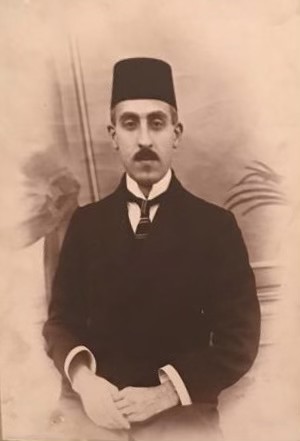
Mohammad Mossadiq
(Born May 19, 1879, or June 16, 1882, according to some historians – March 5, 1967)
Mossadiq’s father, Mirza Hedayatollah, held a ministerial position in the Office of State Revenue.
The Beginning of the Oil Movement
In 1943, during the elections for the 14th session of the National Consultative Assembly, Mossadiq was elected as a member of parliament. That same year, American and British oil companies began negotiations with the Iranian government to secure concessions for oil extraction in northern Iran. When Mohammad Saed’s administration took power at the end of that year, the Soviet Union also expressed interest in northern oil concessions, making the issue a hot topic in both the press and parliament. Protests about these negotiations and related visits to Tehran eventually led to Saed’s government being toppled in November 1944. Although some members of parliament nominated Mossadiq as prime minister, he made it a condition that if his term ended before the current parliament session, he could return to his parliamentary seat. When the representatives did not agree, they turned to Mossadiq’s relative, Saham al-Sultan Bayat. Mossadiq then set the condition for giving a vote of confidence to Bayat’s administration: banning any contract to grant oil concessions to foreign governments or companies. Mossadiq’s condition for the vote of confidence was introduced as an urgent bill and approved by parliament.
Formation of the National Front
In the 1946 elections for the 15th session of parliament, Mossadiq failed to win a seat due to interference by Prime Minister Qavam, the Shah, and the army. He gathered several protestors to object to the election results at the royal court, but the Shah refused to meet with him. Qavam, wanting a compliant parliament to facilitate his plan to reclaim Azerbaijan for Iran, needed a fully loyal legislative body. By the time parliament was formed, Qavam had succeeded in reuniting Azerbaijan with Iran. Later, when members of the Democratic Party, founded by Qavam, gradually distanced themselves from him, Mossadiq was nominated for prime minister by these same parliament members, along with numerous independents. However, he narrowly lost to Hakimi, who received one more vote. At this time, British-aligned actors aimed to ratify the 1933 oil contract from Reza Shah’s era with the Saed Maraghei government, but due to public pressure and efforts by the four-member minority faction in parliament, particularly Hussein Makki’s multi-day speech against the bill, British objectives were thwarted, and the 15th parliament ended its term.
Before the next parliament session began, following the assassination of Court Minister Abdul-Hussein Hazhir, Mossadiq and several of his allies were arrested on charges of participating in a plot to kill Hazhir. Mossadiq was exiled to Ahmadabad, and four of his allies remained in police custody.
The 16th Parliament Elections
In 1949, during the elections for the 16th session, interference by Lieutenant General Razmara, the Chief of Staff, who acted through the national police, led Mossadiq and his supporters to stage a sit-in at the royal court, requesting the Shah prevent Razmara’s intervention. This gathering laid the foundation for the National Front, although by the time of the 1953 coup, due to Mossadiq’s authoritarian tendencies, only a few members remained loyal to him, with the others either withdrawing or openly joining the coup against him. At the Shah’s direction, Colonel Safari was dismissed, and Major General Zahedi—Razmara’s longtime rival who wouldn’t submit to his influence—was appointed as head of the national police. Supported by the Shah, Zahedi annulled the fake election results in Tehran, resulting in a new election in the capital that brought the National Front’s minority faction, led by Mossadiq, to parliament, winning eight out of Tehran’s twelve seats. In this election, Mossadiq received around 30,000 votes in a city of about one million people, allowing him to enter parliament. In the initial election, he had only received 21,504 votes, ranking fifteenth and thus failing to secure a seat.
In 1950, the minority faction in parliament mounted fierce opposition to Razmara, who sought to negotiate a settlement with the British over the oil issue. Razmara argued that Iranians lacked the technical ability to fully manage the oil industry and suggested they should accept a fifty-percent share of the profits. This stance led to his being branded a traitor to Iran’s national interests. Outside of parliament, various political groups, including the royal court and radical Islamists led by Ayatollah Kashani, formed an anti-Razmara alliance. During this time, Mossadiq criticized Razmara’s dismissal of General Zahedi—Mossadiq’s relative and America’s choice to lead the infamous 1953 coup—from his role as head of the police, stating, “The day we insisted that the head of the police should not be dismissed and that a political balance should be maintained was because we wanted the military to refrain from interfering in state affairs. The military should focus on its responsibilities instead of appointing an officer completely loyal to the army’s commands as head of the police.” He added passionately, “If you [Razmara] are a soldier, then I am even more of a soldier than you—I would kill you right here!”
Although Razmara withdrew the proposed oil agreement from the parliament, opposition against him continued. On March 7, 1951, he was assassinated in Tehran’s Shah Mosque as a result of a conspiracy involving key figures from the National Front, including Mossadiq, the Shah, and the Fada’iyan-e Islam. The Prime Minister of Iran was killed by a large-caliber bullet from a Colt handgun, a weapon available only to the military. The shooter was an army sergeant (one of Razmara’s guards), who committed the assassination with coordination from the royal court and personally from Asadollah Alam. At that time, the Shah was opposed to Razmara, fearing that he might carry out a coup to seize power. In his memoirs, Mossadiq only wrote, “Whoever Razmara’s assassin was, they relieved His Majesty of a burden.”
The day after Razmara’s assassination, on March 8, 1951, amid a highly intimidating atmosphere in parliament, the Oil Commission approved and announced the proposal to nationalize the oil industry. The nationalization of oil industries became law in the National Consultative Assembly on March 18, 1951, and in the Senate on March 20, 1951.
The elections for the seventeenth National Consultative Assembly were marred by conflict and turned into chaos. Mossadiq eventually halted elections in the remaining districts after 80 representatives were elected, citing interference from the army and the royal court. Mossadiq realized that the opposition was gaining significant seats in the provinces, and once the number of elected representatives reached the required quorum (79 members), he stopped the elections. As a result, there were no representatives from major cities such as Shiraz, Isfahan, Mashhad, Khuzestan, parts of Mazandaran, Kurdistan, Hamedan, and Lorestan in the seventeenth parliament, leaving 55 seats unfilled.
Upon his return from The Hague, Mossadiq requested a vote of confidence from the National Consultative Assembly on July 10, 1951. With 52 votes in favor, 3 against, and 10 abstentions, he was appointed to form a cabinet. However, the Senate was reluctant to express its support. Finally, after mediation from the Shah, who observed the widespread public and political support for Mossadiq, the Senate convened reluctantly on July 9. Of the 36 senators present, only 14 voted in favor of Mossadiq, while 19 abstained, and one senator voted for Fazlollah Zahedi. Mossadiq did not secure the Senate’s majority but continued with the Shah’s encouragement.
Following protests on July 21, 1952, which resulted in nearly 50 deaths and over 70 injuries, Qavam resigned as Prime Minister due to the Shah’s refusal to dissolve the parliament. Mossadiq subsequently regained the position with a majority vote from the parliament (61 votes from 64 members).
In May 1953, Mossadiq forced the Shah to transfer control of the Pahlavi properties to the government. During this period, Ayatollah Kashani presided over the parliament. However, over time, Kashani and some National Front members, including Abolhassan Ha’eri-Zadeh, Bagha’i Kermani, and Hossein Makki—early proponents of oil nationalization—distanced themselves and even openly opposed Mossadiq’s administration. Zahedi, initially appointed as Interior Minister after Mossadiq’s rise to premiership, declared himself the pro-Shah opposition leader in the Senate.
In February 1953, Ala, the Minister of the Royal Court, informed Mossadiq that the Shah intended to leave Iran for medical treatment, a matter kept confidential. On March 1, when Mossadiq visited the Shah at the palace, he faced an orchestrated protest by the Shah’s supporters, an apparent plot led by the Shah to assassinate Mossadiq. The Shah ostensibly informed Mossadiq of his travel plans, requesting Mossadiq and his ministers to bid him farewell. While in discussion, Mossadiq received several phone messages from U.S. Ambassador Henderson, urging him to leave the palace, but he did not. The Shah’s supporters, guided by Seyyed Mohammad Behbahani, and Shaban Jafari (Shaban the Brainless), dismissed army officers, and other ruffians, gathered outside the palace, and, with Hamid Reza Pahlavi’s direction, attacked Mossadiq’s house. Mossadiq escaped to his son’s home and then to the army headquarters to counter the plot. This event severed Mossadiq’s relations with the Shah, and they reportedly never met again.
Impeachment
Despite Kashani’s support for Baqaei and Zahedi (accused of killing General Afshar Tus), the government moved to strip Bagha’i of immunity and sought to arrest Zahedi, who had taken refuge in the parliament. This widened the rift between Mossadiq and Kashani, making their opposition public. In the parliamentary leadership elections in July 1953, pro-government legislators chose Abdullah Mo’azami, a Mossadiq ally, as Speaker with 41 votes against Kashani’s 30 votes.
On July 6, Ali Zaheri from the Workers’ Party accused the government of torturing suspects in General Afshar Tus’ murder case and called for Mossadiq’s impeachment. On July 9, the Interior Minister appeared in parliament, stating that Mossadiq was unwell, but opponents protested his prolonged absence from sessions over two years. Representative Ha’eri Zadeh noted that in his six terms, no Prime Minister had ever sent a representative for an impeachment session, not even Reza Khan himself. The impeachment was set for July 14, and soon after, Hussein Makki, now an ardent opponent of Mossadiq, was elected to the Currency Reserve Oversight Board with 41 of 72 votes, marking the last decision of the seventeenth parliament.
Referendum by Mossadiq’s government
In support of retaining Mossadiq’s government and dissolving parliament, Mossadiq’s loyalists in parliament resigned, preventing it from reaching a quorum. Mossadiq called a referendum on the dissolution of parliament, marking the first such political referendum in Iran’s history. Mossadiq’s decision to dissolve the parliament through a referendum, with less than a year left in its term, drew opposition from some of his prominent supporters and advisors, including Mo’azami, Shai’gan, Sanjabi, Sediqi, Rezavi, Maleki, and Nariman. They attempted to dissuade Mossadiq, but he stood firm.
Razavi, the deputy parliament speaker, criticized Mossadiq’s unilateral decisions in a faction meeting on July 13, stating, “Dr. Mossadiq, until now, we accepted everything you imposed on us without objection. But regarding this referendum, we will not remain silent.” In a separate meeting in parliament, Mo’azami opposed the referendum, calling it unprecedented and lacking the support of most representatives. Sayyed Mohammad Behbahani, in a letter, also urged Mossadiq to reconsider, while Mozaffar Bagha’i telegraphed that he would resign from parliament if Mossadiq abandoned the referendum. In a meeting with U.S. Ambassador Henderson, Mossadiq explained his intention to dissolve parliament, claiming British agents had bought off nearly 30 members, and warned they could likely bribe ten more to bring down the government.
The referendum faced criticism due to the separate voting days in Tehran and other cities and the split voting stations for supporters and opponents. For instance, in Tehran, pro-referendum boxes were located in Sepah and Railway Squares, while opposition boxes were in Baharestan and Mohammadieh Squares. The French newspaper Le Monde reported on the referendum, describing apparent coordination between Mossadiq’s supporters and the Tudeh Party. With around two million participants, representing approximately 99.9% of voters, the referendum resulted overwhelmingly in favor of dissolving the parliament, with only 115 opposing votes in Tehran and 710 across the country. On August 12, 1953, Mossadiq officially declared the result and requested the Shah’s decree to hold new elections. However, the Shah refused, leading to a break between him and Mossadiq.
In his memoirs, Mossadiq argued that according to Iran’s constitutional traditions, a king could not dismiss a prime minister without parliament’s approval and that the monarch’s role in issuing the prime minister’s mandate was purely ceremonial. Mossadiq viewed the Shah’s dismissal decree as legitimate only when it followed a parliamentary vote, pointing to Sultan Ahmad Shah’s similar attempt to dismiss Prime Minister Samsam ul-Saltaneh.
Dr. Mossadiq’s Letter to the Hazhir Ministry of Court (October 18, 1949):
“…Of course, His Majesty, the Shah, is the source of all reforms, and the primary purpose of the sit-in was to bring about, during the recess when the appointment of the Prime Minister does not require parliamentary approval, a government dedicated to safeguarding the interests of both the monarchy and the nation. Under the reign of such a king, the country would have a parliament capable of enacting fundamental reforms to alleviate the poverty and misery of the people and to bring peace and prosperity to the country…
In other words, several years before his associates like Sadiqi and Sanjabi discussed the dissolution of parliament and Shah’s rights during recess, Mossadiq himself had acknowledged this right. [Of course, what Mossadiq mentioned in his book pertains to the 1906 Constitution, not the constitution that had been amended three times by constituent assemblies up to his time.]
Seventeenth National Assembly Election and the 30th of Tir Uprising
In July 1952, Mossadiq requested that the Shah assign him the responsibility of the Ministry of War. This request stemmed from obstruction by army officers in implementing the reforms Mossadiq aimed for, which he believed could only be achieved if the officers directly followed the Prime Minister’s orders. The Shah’s response to Mossadiq’s request was, “Then I suppose I should pack my bags and leave the country.” Mossadiq’s argument for taking over the Ministry of War was to reduce the court’s interference and to allow progress for the good of the country. Since the military staff was under the Shah’s direct command, any order he issued was executed, leaving the government responsible but powerless. Discussions between Mossadiq and the Shah on this issue led nowhere, and on July 16, 1952, Mossadiq resigned. His reasoning was that, according to the constitution, ministers have joint responsibility to the parliament, and the appointment of the Minister of War should be the Prime Minister’s prerogative, not the Shah’s.
Mossadiq’s Letter of Resignation:
“To the noble presence of His Majesty the Shah. Since, based on experiences from the previous government, progress at this critical time requires that I personally take charge of the Ministry of War, and since this request was not approved by His Majesty, a future government should be formed by someone who fully has His Majesty’s trust and can implement his intentions. In the current situation, it is not possible to successfully carry out the struggle that the Iranian people have started”.
Your humble servant
Dr. Mohammad Mossadiq.
30th of Tir Uprising
After the parliament expressed its favor for Qavam, the Shah issued a decree appointing him as Prime Minister. From the outset, Qavam faced fierce opposition from the National Front faction in the Seventeenth Parliament and requested that the Shah dissolve the parliament. However, the Shah did not agree. Qavam began his premiership by issuing a harshly worded statement, emphasizing the “separation of religion and politics” and warning about “the dark reactionary forces of religion.” He ended the statement with, “The helmsman has adopted a new policy.”
This declaration led the overwhelming majority of Tehran’s workers to oppose Qavam.
The Tudeh Party, which despite being declared illegal, was still the largest party in Iran and resumed its activities openly at this time. Furthermore, due to Qavam’s statement on the separation of religion and politics, Islamists opposed him most vehemently. Eventually, the vast majority of societal forces organized a large protest, which later became known as the “30th of Tir Uprising.” With violent actions from the Shah’s brothers, and several courtiers, and the police in Tehran, more than 170 protesters were killed in the uprising, Qavam was forced to resign. Following the parliament’s expression of support for Mossadiq, the Shah again appointed him as both Prime Minister and Minister of War. After the killing of protesters in the 30th of Tir Uprising, the Seventeenth Parliament deemed Qavam deserving of death and issued a decree to confiscate his assets in favor of the families of the martyrs of the 30th of Tir. However, due to Qavam and Mossadiq’s familial ties, no action was taken against Qavam, which showed the whole event of the 30th of Tir Uprising was just a prepared Scenario in advance pressuring the International Court of Justice to issue its verdict in favor of Iran.
 ADABSARA