
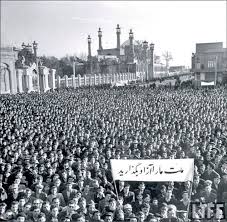
Razmara is a victim of America’s ambitions to share Iran’s oil resources
Taj ul-Moluk, Reza Shah’s wife and mother of Muhammad Reza: Once, when “Razmara” was making a conspiracy plan to disrupt the reign of Muhammad Reza [read: to prevent the autocracy of Muhammad Reza Pahlavi], he had dreams, I said to Muhammad Reza, I am afraid that a Reza Khan will be found and do the same thing that your father did with Ahmad Shah did it, with you! I remember that Muhammad Reza laughed and said: “Razmara is not Reza Shah, nor am I Ahmad Shah!”
Who was Haji Ali Razmara?[1]
Haji Ali Razmara was born on Sunday, March 31, 1280, on the 10th of Dhu Hijjah, 1318, in Tehran, and for this reason, he was named Haji Ali according to the common tradition among Shiites. He was a descendant of one of the old officials of Naser al-Din Shah Qorkhane [weapon factory] and the son of Colonel[2] “Mohammed Khan Razmara”, a former artillery officer and head of Nizam School in Tehran. It has been written and said that his father had deep knowledge in artillery.
Razmara continued and completed his elementary education first in the schools of that time, then in the French school of Alliance, Aqdasiyeh and Dar al-Funun, and then in 1297, when he was seventeen years old, he entered the school of Nizam Mushir ul-Dowle. After completing his studies at Nizam School, he joined the Kazakh army and met “Reza Khan Sardar Sepe” during the operation to suppress the jungle movement. Reza Khan realized the cleverness and talent of this young officer and sent him to France in 1302 as one of the first officers to be sent abroad, and because he was superior to others in terms of rank, he was entrusted with the supervision of the students sent to France.
Razmara completed his studies at the “Saint-Cyr” military college in France, and his seriousness in his studies was appreciated by the French commanders.
After returning to Iran, while holding the command of the battalion, in 1927 he was promoted to the rank of major and appointed to the command of the Kermanshah Independent Regiment.
His actions in this job were so impressive that he reached the rank of second colonel in 1929. The following year, after obtaining the rank of colonel, he became the commander of the Lorestan brigade and achieved complete success in suppressing the rebels in the aforementioned region, where officers such as Amir Ahmadi, Khazaei, and Shah Bakhti were relatively semi-successful before him.
Razmara was called to Tehran in 1935 and taught at the recently established War University under the supervision of a French general[3]. He taught tactics, map reading and military geography in this university.
Razmara’s most brilliant work in the army was the establishment of the Geographical Department to prepare detailed maps of all of Iran in 1937. Due to his success in this work, he reached the rank of Brigadier and was placed at the head of this department and became a member of the Supreme Council of the Nizam.
At this time, even though he had the full support of Major General Zarghami, the Chief of the Army Staff, after attaining the rank of Brigadier General, he could not get a position and a sensitive job in the army, and the main reason for that was the existence of a case in the army court in which he was accused that has refused to implement the center’s order to execute one of the Lurs people in Lurestan.
In the critical days of the of September 1941, when the Russians and the British invaded the country, Razmara was one of the officers who believed that the Iranian army was not capable of fighting in this field and stated that Army should leave the conflict before destroying the entire Iranian army[4]. At this time, the Supreme War Council approved a plan by which all conscript soldiers would be released and the army would hire contract soldiers. Razmara refused to sign this plan and considered it to be detrimental to the country. This plan was strongly objected too by Reza Shah, and all the commanders who signed it were questioned, and several of them were handed over to the army court and imprisoned. After this incident, Razmara received some attention.
Following Reza Shah’s resignation and departure from the country and the disintegration of the 18 divisions of the Iranian army, which were formed with the blood of innocent Iran’s people, a large number of army personnel who were Reza Shah’s comrades and companions retired, and the field for the growth of young and educated officers prepared Razmara became the commander of the 1st Army of the Center instead of Major General Bouzarjomehri and was in this position for almost a year. After that, he was appointed as the head of a new unit in the army named Army Training Division.
Razmara was elected as the head of the army staff in 1943. At that time, the vast majority of the army commanders were senior to him, and he was able to stay in that position for a few months only with the tactic of humility. In the same year, the Allies arrested many army men and officers for the crime of having fascist tendencies. The method of arrest was very harsh and did not comply with military regulations. After meeting with the military officials of the allied countries, while criticizing their actions, Razmara resigned as the head of the army staff and thus increased his supporters in the army.
In late March 1944, Razmara received the rank of major general after five years at the rank of brigadier and was reappointed as the head of the army staff. This time, his presidency lasted nearly fourteen months, but he suddenly retired and Major General Arfa[5], who was his rival for many years, took his place.
The efforts of Qavam and Amir Ahmadi caused Razmara to come out of retirement in May 1946 and be sent to Kurdistan with the position of head of the inspection of Region 2. He was in that semi-combat mission for two or three months before he was appointed as the head of the army staff for the third time and started working. In this year, as a result of the strategy of Qavam ul-Sultaneh, the issue of Azerbaijan, South and Kurdistan was resolved. These successes, in which both the army and Razmara played a role, caused Razmara to receive more attention from the authorities.
Razmara played a key role in the 15th term elections conducted by the Democratic Party of Iran, and the commanders of the army and barracks, who were among his assistants, carried out his orders, which usually included fulfilling the wishes of the Qavam.
In late March/early of April 1948, the Shah gave him the rank of lieutenant general in order to satisfy Razmara and encourage him. In that history, the Iranian army had no more than three lieutenant generals, and Razmara was the fourth person to achieve this position. Since 1949, Razmara has been seriously promoted to the position of prime minister.
Forming the government of Lieutenant General Razmara
On the 26th of June 1950, Razmara was summoned to the court and received his prime ministerial mandate. He was not a political man, but he was a worthy and energetic manager. Razmara’s leadership was not a surprise to those who were in politics. His shrewdness and timing were such that at the same time as he agreed and coordinated with the three policies of England, America and the Soviet Union, each of these governments saw his leadership as beneficial to them. Each of the countries had their own legitimate reasons for empowering the military[6]; The British forced “Mansour ul-Molk” to resign because he was delaying the oil bill and was not willing to defend it, so that Razmara could become the prime minister because they hoped that, with his special cleverness, Razmara would To complete the oil bill in their favor. The Americans also needed a successful military to be able to maintain Iran’s security and be less corrupt than Pahlavi family does, but they, who at that time strongly wanted to get Iran’s oil, did not imagine that Razmara would pay due attention to their demands in the flow of oil, will not do it, for this reason, although the Americans were among those who advised the Shah to appoint Razmara as the prime minister, they soon changed their attitude towards him and changed from fulfilling their promises to Razmara indicating the granting of aid to his government an they refrained him. In fact, Razmara did not take any side in dealing with the three prominent powers in Iran’s current politics, England, America, and Russia.
The life of his government was short, but he tried to follow a neutral and balanced policy towards these three countries during his tenure. This policy was especially not liked by the Americans, who were trying to become active activists in Iran’s politics as soon as possible by emptying the feet of the British. On the opposite side of Razmara, Muhammad Reza made maximum use and opportunism of America’s eagerness to get involved in Iran’s politics, which, of course, was hard to come by when he found out that the Americans had given him the code name Snail, and they called him by this derogatory name. If Muhammad Reza was sure of America’s continued support for Razmara, it would have been impossible for him to plan to kill Razmara. What made his bold in this work was cutting America from the prime minister.
Another reason for Muhammad Reza’s determination to kill Razmara was that Razmara was a self-made with strong personality, and the Shah could not tolerate any strong prime minister and politician with good intentions and cooperation, mainly because of his own inherent weakness and even in this particular case considered Razmara a serious threat to his throne[7].
Razmara and supplementary bill/Gas-Golsheian Agreement
Before taking the order of the Prime Minister, Razmara tried to reconcile with ” Mossadiq” in any way possible, so that he might be able to get his support in approving the oil bill as the expediency of the day demanded. Because Mossadiq didn’t think about anything except breaking the exclusive relationship of England with the issue of Iranian oil, without thinking about its effects and consequences. At this time, Mossadiq strongly wanted to open the feet of the Americans to Iran’s oil table.
It was under these conditions that Razmara formed his cabinet on June 26, 1950 amid widespread protests by the hired representatives. Undoubtedly, the most important issue facing Razmara was the oil annexation bill and thwarting the efforts of some representatives to nationalize the oil industry, which Razmara did not consider suitable under the conditions of that time. The desire of the Majlis issued the decree of the Prime Minister in the name of Haji Ali Razmara, the Chief of Staff of the Army. Razmara also introduced his government the next day, June 26, 1950.
The oil commission, which was formed on June 20, 1950, asked Mansour’s government in the first meeting to provide the oil file to the commission, but this was not done until the beginning of Razmara’s prime ministership. Therefore, the commission wrote a letter to the new prime minister and warned him to send the oil file to the commission with a clear statement about the supplementary bill within ten days. Within the given deadline, the government sent the oil file to the commission; But Razmara did not comment on the supplementary bill.
In this regard, the representatives of the so-called National Front, along with two members of the commission, impeached the government for interfering in the implementation of the law of October 21, 1947, which in paragraph e, was stated:
The government is obliged to carry out the necessary negotiations and measures, especially regarding the oil of the south, in order to fulfill the national rights, and to inform the Majlis of the result[8].
At the same time, Demagogue Muhammad Mossadiq, who had hand in hand with Muhammad Reza Pahlavi in order the bring the United State on the Iran’s Oil table said in a press interview: The National Front cannot recognize the Darcy Agreement and the 1933 Agreement, as well as the annexation agreement, and these types of worthless documents will not be a means of usurping people’s rights[9].
The impeachment of the government lasted for four days and Lieutenant General Razmara was forced to defend the supplementary agreement bill. Thus, the struggle for oil became more difficult.
Mossadiq and the representatives of the so-called National Front in the Majlis believed that the biggest loss of the supplementary contract bill is the legalization of the 1933 contract[10]. Because it was stated in Article 10 of the supplementary contract: by observing the provisions of this contract, the main contract [1933/1312] will remain in full force and validity. In the meantime, the press also played a very big role in arousing public opinion.
Razmara and the issue of Nationalization of the Oil Industry
It should be noted that the nationalization of oil globally began in the 1930s when Mexico declared its oil industry nationalized. However, Mexico did not cancel the concessions of oil companies and therefore was different with what Mossadiq had in his mind.
At the 22nd meeting of the Oil Commission, Mossadiq’s response to the letter of Finance Minister Gholam Hussein Forohar, in which he defended the supplementary bill, was read. Rejecting the views of the finance minister, Mossadiq discussed the theory of nationalizing the oil industry throughout the country. In the thesis, the proposal of the so-called national front was put forward: in the name of the happiness of the Iranian people and in order to help ensure world peace, we suggest that the oil industry in all regions of the country, without exception, be declared national. That means exploration, extraction and exploitation should be in the hands of the Iranian people. Haerizadeh[11], Allahyar Saleh[12], Dr. Shaygan[13], Mossadiq, Hussein Makki[14].
However, the Oil Commission, which never accepted the principle of nationalization of oil industries throughout the country until the murder of Razmara, in a private meeting in which the Democrat Mossadiq!! As the chairman of that so-called commission, did not allow the members of the commission to go to the toilet, he unanimously rejected the supplementary agreement:
The Oil Commission, which was formed according to the decision of the Majlis of June 20, 1950, after negotiations and studies, came to the conclusion that the Saed-Gas supplementary agreement is not enough to fulfill Iran’s rights. Therefore, he expresses his opposition to it[15].
With the publication of the news of the oil commission’s opposition to the supplementary agreement, a general uprising took place at the instigation of Mossadiq, Kashani and the Fadaeian-i Islam, who were friends of each other at that time, and the government in turn increased its pressure and harshness on the people and the hired press.
On the 10th of December 1950, the report of the Oil Commission was read by Hussein Makki (reporter of the commission) in the public hall of the Majlis. In this report, the oil commission had unanimously announced its opposition to the supplementary agreement bill. Of course, the report also mentioned the proposal of the representatives of the National Front and not the members of the Oil Commission regarding the nationalization of oil industries throughout the country.
In that day pro-nationalization of oil, like those who poured into the streets in 1977 and 1978 and later regretted, by holding large gatherings, they declared their support for the plan to nationalize the oil industry throughout the country without knowing what means nationalization of oil. In the meantime, Aboulqasim Kashani, who replaced oil with Kermanshahi ghee, also announced his support for this step, and a group of clerics also announced their support for his action.
Lt. Gen. Razmara, who said in a meeting attended by some representatives that Iranians do not have the ability to make pipes/sunglasses [of course, he was wrong because based on subsequent archaeological excavations, it was found that the age of sunglass making in Iran reaches the Bronze Age!], what about the oil industry, decided to withdraw the supplementary agreement bill. Therefore, on December 23, 1950/3rd of dey1329, Gholam Hussein Forohar, the Minister of Finance, withdrew the bill following his remarks in the public meeting of the Majlis.
After a while, the struggles of the supporters of oil nationalization intensified and the demonstrations of supporters in the Majlis and outside it, as well as protests in domestic and foreign circles intensified; The anger of the British in Tehran and London due to the rejection of “Gas Golshaian’s Bill” increased the pressure on Razmara. In response to the supporters of the so-called national front who demanded the nationalization of oil, the prime minister explained that this project is not practical in our country at the moment and we may not be able to afford it[16].
Razmara resisted those Majlis who pressured him to nationalize Iran’s oil; these representatives, who were in the absolute minority and under the best conditions before Razmara’s assassination, did not even reach 10 people.
The Prime Minister also had opponents in the Senate, such as: Mateen Daftari [a relative of Mossadiq and his senior son-in-law], Seyyed Muhammad Tadin [a very right-wing person and a supporter of the court and one of the heads of the Majlis during Reza Shah’s tenure and an important factor in changing the monarchy]. Fazl-ullah Zahedi [one of the later perpetrators of the murder of General Afshar Tous and the main perpetrator and prime minister of the CIA coup on 19 August 1953; A corrupt person in every sense of character], Adl ul-Molk Dadgar [a member of the iron committee of Seyyed Zia, whose coup d’etat in 1299 was one of his crimes, and for several terms the Speaker of the Majlis during Reza Shah’s dictatorship and trusted by Ribbentrop, the foreign minister of Nazi Germany, and senator for many times], Dr. Hessabi [a scientifically distinguished but politically uncertain figure[17]] and Abdul Hussein Nikpour [five-term member of the Majlis and five-term senator and for more than twenty years the head of the Chamber of Commerce and member of the Council Higher Economics]. In the Majlis, apart from the eight-member faction of the National Front headed by Mossadiq, several individuals such as: Moazzami [Member of the National Front] and Jamal Emami [a right-winger and hard-headed supporter of the Shah and the court] also opposed him[18].
Razmara oil policy
The focus of Razmara’s efforts at this time was that the Iranian government would receive a larger share of the income from the sale of Iranian oil, and it sought to conclude a new agreement with the British-Iranian Oil Company. At this time, the (American) Aramco company had signed an agreement (50-50) with Saudi Arabia[19]. But the Anglo-Iranian Oil Company was not easily willing to make similar arrangements with Iran.
In this way, Razmara’s plan was to nationalize oil in the long term and gain convincing concessions for the oil company until the right time for nationalization of oil. When both sides showed too much stubbornness, Razmara tried to change the game and put the Majlis and the oil company in front of each other and warn them of the bitter consequences of their behavior and finally, his correct opinion was proved. His feeling was that due to Iran’s financial issues and lack of technical expertise, nationalizing the oil industry is still too early and it will be disastrous for the country economically which was proved was correct later on. Razmara eventually succeeded in carrying out his opinion and approving a contract with the British in which the share of each party was considered to be 50% of the company’s income. And this was his winner card in the battle against Mossadiq and his allies. However, despite the insistence of the British, he unfortunately failed to raise this issue in the Majlis; a negligence that cost him and the people of Iran dearly. He thought that he could preserve the government by doing this, and on the other hand, he had the illusion that the oil nationalization bill would not be approved soon in the Majlis in which the British embassy and Shah/court had a lot of influence, a miscalculation that due of it both Razmara and the people of Iran paid a heavy price; With all his intelligence, he could not understand that the Shah was behind the nationalization of oil. This fifty percent agreement was what the British, who new that American want to share in oil of Iran against the British’s interest and never wanted to accept, but considering the conditions and atmosphere that Mossadiq, Kashani and their allies had created in the society which meant the loss of all the income of the Iranian and British oil companies, this for them, the contract was an escape clause and therefore they accepted it. The path that the Razmara government had set before them.
It was in this situation that the impeachment of members of the National Front was raised and Razmara responded to it. The minority believed that they do not have judicial security and that the government of Razmara is preparing for a dictatorship. Though the member of Majlis voted, out of 103 people present, 91 people in favor of Razmara. This opinion showed that the minority in the Majlis was an absolute minority and their number did not exceed 12 people, while these events were taking place in the Majlis that in that day a large gathering was held by Fadaeian-i Islam, accomplices of their allay National Front, for Intimidation of the government and Majlis and giving in to the nationalization of oil. The slogans of the seduced crowd were all against the British oil company and the strong condemnation of the Razmara government. But the Majlis showed that they were not influenced by the commotion outside the Majlis and the dictatorship of the minority inside the Majlis.
In the meantime, the British ambassador was anxiously witnessing what was happening around him and was constantly in contact with the prime minister and asked him to go to the Majlis as soon as possible and announce the 50-50 agreement[20]. The ambassador believed that with the announcement of this agreement, the anti-British atmosphere that had formed in the society will be alleviated. The British ambassador was worried about the news coming from the Majlis, which showed that in the oil commission, Mossadiq and his allies in the national front are working hard while Razmara would only respond calmly, trust me.
On the other hand, Shah/court and Mossadiq, who were determined to remove oil from the British monopoly and open the American foot to Iran, probably, according to me, they were informed of the agreement between the British Embassy and Razmara regarding oil based on the principle of halving, and therefore Shah speed the conspiracy against Razmara and decided to eliminate the prime minister before he introduce the 50/50agreement in Majlis.
In this regard, there is no doubt that the Shah was extremely afraid of Razmaraa, because he had a very strong influence in the army and was respected by the majority of the nobles, and he was easily able to take control of the armed forces, and at the same time, after the head of the government had good relations with England and America, and by turning a blind eye to the escape of Tudeh party leaders from prison, he had also established good relations with the Soviet Union, and thus, in all respects, he was considered a very big danger for the Shah; Someone who had claimed here and there that “neither Razmara is Reza Shah nor I am Ahmad Shah”[21]. The Shah felt the danger in those days, and therefore, in order not to suffer the fate of Ahmad Shah, he decided to destroy Razmara, and he did the same.
The secrets of Razmara assassination
Regarding the assassination of Razmara, as it has been determined since then, without any doubt, that assassination was the work of the court and the Shah himself, who had used the Fadaeian-i Islam as a tool. A few days before this plan be carried out, in the meeting of the Nawab Safavi with Shah, the so-called first person of the country emphasized the false issue that Razmara is a source of problems… and incited this terrorist group assassinate Razmara. Of course, as some military experts say, at the same time that the members of Fadaeian-i Islam shoot Razmara, one of the guards of the Shah’s court shoot and killed him from very short distance[22]. In addition, during the national movement, a very close cooperation was formed between the court and Mossadiq[23].
Another consideration of Razmara in getting the 50/50 contract unveiled was that if he presented that contract to the Majlis, he would lose the support of America. In America’s policies at that time in Iran, oil had the first priority, and the administration of that country by a strong pressure wanted to prevent the danger of Iran falling into the arms of the communists, and to establish a healthier government in Iran was the next priority for the United States administration. The Americans had three problems, one was oil of Iran, which was a monopoly of the British, the second was the existence of a powerful government to stop the Tudeh Party, because at that time the specter of McCarthyism had occupied all the minds of the Americans, and the third was a healthier government. Razmara could help America in the direction of a stronger and healthier government, but in the case of oil, it should wait, unless Razmara would put them in front of a done deal by carrying out a coup.
The Shah, who was getting more and more worried about Razmara’s intentions, a few days before Razmara’s assassination, had suggested to Mossadiq to become the Prime Minister instead of Razmara, but Mossadiq had refused to accept the Shah’s proposal at that time. The reason of it was evident. Mossadiq could not get the Majlis yes for his plan so-called nationalization of oil and under the influence of Britain it was not possible at that time to get the confidence vote for his government.
The reason why Mossadiq was interested in the nationalization of the oil industry before becoming the prime minister was that he wanted to be hero in campaign against Britain by any mean
Under those conditions, Razmara would have either staged a coup and overthrown the Shah, or he would have left, or he would have stayed and been killed. Somewhere, without providing a document or evidence, it has been said that Razmara planned to launch a coup against the Shah on March 8, 1950, when Shah was supposed to go to Varamin a small city near Tehran. The Shah’s appeal to the Fadaeian-i Islam on the 6th of March, to complete the work of Razmara actually shows that the Shah saw the danger very closely. Of course, if things went as planned by Razmara and he could announce the halving agreement in the Majlis, the ground for his coup would be more ready. Because in that case, the British would have supported him more fervently.
In this way, before the assassination of Razmara, the Shah first tried to appoint Mossadiq in his place, and in addition, through Seyyed Jalal Tehrani, an attempt was made to get Razmara to resign, which Razmara refused to accept[24], and therefore the Shah whose aim was to remove Razmara, at this time, meets the Fadaeian-i Islam asking them to start his plan. Nawab says: “During the prime minister ship of Razmara, Seyyed Abdul Hussein Vahedi and I requested a meeting with the Shah. In that meeting, we complained to the Shah about the corruption in the country when and where you considers yourself a Muslim [!] why you do not stop all this corruption and immorality. Then we added that our intention is to destroy the causes of corruption. In response, the Shah accepted the existence of corruption, but put all the blame on Razmara[25].
In addition to this meeting, there are other evidences that confirm the Shah’s direct involvement in the murder of Razmara through using the Fadaeian-i Islam as a tool, which clearly indicates that the Shah intended to destroy Razmara, and since then even in the method of assassination, the officials of the court also played a direct role, as Muhammad Amini wrote in the book “Deshneh Soudagaran siassi dar kaf-i dast khonin of the Fadaeian-i Islam ” [The sting of political profiteers in the bloody hands of Fadaeian-i Islam]: “Mr. Rafiei told Muhammad Turkman that on the evening of the 15th of Esfand, he hosted Nawab Safavi, the Wahedi brothers and Khalil Tahmasabi and “Before the evening, Mr. Seyed Hashim Husseini Tehrani came to our house excitedly and said: Mr. Feridouni said that if you want to kill Razmara, be ready because the aforementioned will participate in the funeral ceremony [Faiz] tomorrow morning.” He will be present at the Sultani Mosque” and further on, we read in the same place: “The head of the Fadaeian-i Islam organization adds that Feridouni[26] did not stop at sending a message and that night before killing Razmara, he went to our house, which was located on Lurzadeh street. He came and repeated the same thing.”
There is evidence that Razmara intended to do this on March 16. This is why we see that Assadullah Alam, in order to carry out Shah Order, did drag Razmara to the slaughterhouse. On the appointed day, March 7, Asadollah Alam, who was the Shah’s eyes and ears, went to the Prime Minister’s office early in the morning, but Razmara was not there. Alam then went with Razmara’s deputy to the Majlis, and when he didn’t find Razmara there, he left the session and finally found him. With much insistence and by saying that the Shah had requested Razmara to attend the memorial service for Faiz on his behalf, Alam took him to the service at the Soltani Mosque. The fact that Razmara was taken to the mosque under the insistence and pressure of the Shah’s close associate indicates that every effort was made to somehow lead him to his death. After the assassination, when Brigadier General Muhammad Daftari[27], the head of the national police, arrived at Marble Palace from SultaniMosque, the Shah in presence of Alam, had laughed and said, “Go, I know[28].”
After his release from prison in 1952, Khalil Tahmasabi explained his motivation for killing Razmara as follows: “Razmara was plotting to kill the Shah and deceived him. It was through these illegal actions that Razmara managed to reach high ranks and even occupied the position of Prime Minister. Later, however, His Imperial Majesty realized that the assassination attempt on February 4, 1949 had been instigated by Razmara[29]“
Regarding the involvement of others in this affair, Navab Safavi’s wife stated in an interview: “The Shah knew that Navab would not remain silent against Razmara. Evidence indicated that if the Fadaeian failed to eliminate Razmara, he would swiftly arrest all of the Shah’s supporters under the pretense of security. For this reason, an army officer was assigned to move alongside Khalil Tahmasabi, and if Tahmasabi failed to complete the assassination, he would shoot Razmara with a Colt pistol[30].”
The evidence suggesting that there were two shooters includes, firstly, the fact that bullets were fired at Razmara from two different directions: one bullet entered his neck from the left side and exited through his forehead, while two other bullets entered his shoulder from the right side and exited through his chest and shoulder. Secondly, the depth and diameter of the wounds indicated that the bullets were not fired from a small revolver but from a Colt pistol, a weapon exclusively available to the military. The reason for this was that the Shah and his associates concluded that if Razmara were merely wounded and not killed, he would not leave them in peace. Therefore, he had to be killed. An army sergeant was found and sent with Alam to the Soltani Mosque. His task was to immediately target Razmara with the Colt at close range as soon as the sound of Tahmasabi’s gunshot was heard, ensuring no chance of error in Razmara’s assassination.
Escape of Tudeh Party Prisoners Case
The escape of several political prisoners from the Tudeh Party added to Razmara’s difficulties during his six-month tenure. This incident was so precise and well-executed that it immediately raised suspicions of Razmara’s direct cooperation and secret collusion with the Soviets in the minds of the public[31]. One argument for Razmara’s role in facilitating the escape is that the truck used for the prisoners’ escape belonged to the military, with armed soldiers and guards on board, making it unlikely to be a staged event. The conclusion, however, is weak. It’s clear that escaping from prison with a military truck, driven by a military driver and carrying soldiers, would require cooperation from prison staff. The key point is to determine whether those who facilitated the escape did so under Razmara’s orders or at least with his consent. Razmara’s true political intention for enabling the Tudeh members’ escape was, supposedly, that their escape would establish their guilt, as their flight would confirm their crimes, while also pleasing the northern neighbor (Russia) and revealing his connections with the Tudeh leaders. Razmara had hinted multiple times that the National Front should be disrupted by the Tudeh[32]. However, none of these arguments stand on solid ground. Why should the prisoners be acquitted after trial? Some might indeed be acquitted, which would be appropriate, as the Constitution allowed for the formation of meetings and political parties. But why would they take action against the government if they were acquitted? Such assumptions hardly align with Razmara, who was among Iran’s most intelligent officers.
Secret Ties with Britain[33]
During this period, Razmara also began secret negotiations with the British oil company. In a highly confidential meeting, he engaged with the British oil company’s envoy, requesting that the company promptly submit its proposal for oil deals to the Iranian government. As a result of these talks, both Iranian and British sides agreed to a 50-50 profit-sharing arrangement for oil revenue. Razmara insisted that this agreement be kept secret until a final decision was reached. Under this deal, Iran’s oil income would have tripled compared to the previous agreement[34].
The fact that the British were willing to sign a new contract based on equal income was significant and offers insight into the hidden motives behind Razmara’s assassination. Mahmoud Toloei, in The Game of Power, suggests that Razmara kept this 50-50 agreement secret due to his intentions to stage a coup and overthrow Muhammad Reza Shah, planning to reveal the deal after a successful coup to secure their/Briton support[35]. However, the reality is that Razmara was scheduled to present this agreement in Majlis on March 7; as some say, “the oil contract was in his pocket when he was killed.”
In late February 1951, the Shah learned about the Prime Minister’s secret connections with the British, which increased his suspicions of him. At the same time, the Shah’s agents in the military informed him of suspicious military activities and Razmara’s intention to assassinate him. Concerned about Razmara’s rising power, the Shah warned him in a letter, stating, “You are not Reza Shah, nor am I Ahmad Shah. Abandon this ambition, or it will cost you your life[36]“
Razmara’s Motive in Plotting to Assassinate the Shah
Undoubtedly, Razmara’s ambition played a primary role here; he was a man whose only satisfaction came from reaching the highest position in the country. Regarding his domestic and foreign alliances, he was known for closely aligning himself with embassies of various countries, trying to keep everyone on his side. Though he did not believe in the Tudeh Party, he saw it as potentially useful to his success and maintained regular contact with them. Although Tudeh leaders deny this connection, according to Toloei, “Kianouri,” one of the Tudeh leaders, praised Razmara so highly that it he show clearly Razmara intentions[37]. Additionally, Anvar Khamei, another Tudeh leader, perceived British involvement behind these plans. He stated, “Now, after years and much disclosure, it has become clear that Razmara was the main orchestrator of the Shah’s assassination attempt[38] and coup, with the British executing this plan through him to establish a military dictatorship and suppress the movement against the oil concession in the south from the outset[39].
The primary benefit Razmara would gain from this assassination was that if the Shah were killed, Razmara would likely assume absolute power. The government and ministers were so ineffective that they feared him even before this incident[40].”
Razmara was an intelligent, hardworking, serious, and power-seeking man. He was considered knowledgeable and an expert in his field. During his military career, he authored works on Iran’s military geography, written during his time teaching at the War University. Fearless and unforgiving in pursuing his goals, he married into the Hedayat family and had five children.
The Fate of Khalil Tahmasabi
Everyone who saw Razmara’s bullet wounds had no doubt that he was killed by a Colt pistol bullet, not a small-caliber weapon. Tahmasabi, by taking responsibility for Razmara’s assassination, shielded others’ intentions; he understood the situation and had no way back[41]. In 1952, he was protected from prosecution by a law passed by Majlis under Prime Minister Mossadiq, which the Shah ratified. His execution was not for shooting Razmara but rather for other charges attributed to him[42].
Reaction of Mossadiq to the Razmara Assassination
when the news of Razmara’s assassination reached the Majlis, Mossadiq was in the oil commission investigating how to nationalize oil and did not even allow any of the members of the commission to leave the room and threatened them to resign first and then leave the meeting, that it shows how much he was excited at that time in order to intimidate the Majlis and push forward the approval of the oil nationalization plan.
Premiership of Mossadiq
When the Majlis voted for Mossadiq’s Premiership by staging Jamal Emami the closest person among the Majlis representatives to the Shah, he made the approval of his 9-point plan as a pre-condition for the acceptance of the prime minister job, which is not known when he wrote it? Because he turned it away immediately. Therefore, the Majlis approved it in the same session, the Senate approved it the next day, and the Shah immediately signed it. It was after that that Mossadiq became the prime minister.
[1] [1] http://www.e-heyat.com/fa/89/1262,16-
[2] – طلوعی، محمود؛ بازیگران عصر پهلوی، تهران، علم، 1373، ج2، ص407.
[3] – مهدی نیا، جعفر، زندگی سیاسی رزم آرا، تهران، پاسارگاد، بیتا، ص14.
[4] – قدس، رضا؛ ظهور و سقوط رزم آرا، تهران، نگاه، 1372، ص32.
[5] – یکی از مهره های امریکا که بعدها بخاطر داشتن رابطه با سازمان اطلاعات امریکا، سیا، نقش مهمی در کودتای امریکایی 28 امرداد ایفا نمود.
[7] – روبین، باری؛ جنگ قدرتها در ایران، ترجمه محمود طلوعی، تهران، آشتیانی، بیتا، ص57.
[8] – که ایرادی بسیار نابجا و تنها بخاطر در فشار گذاشتن رزم آرا بود، زیرا هنوز یک هفته نشده بود که او نخست وزیر شده بود. در اساس در دهه 1320 ، دو نفر خود ساخته به وزارت رسیدند؛ کسانی که از خانواده های دوله و سلطنه نبودند و چون خاری بودند در چشم خاندانها حمومتگر خائن ایران نظیر اسفندیاری، فرمانفرمائیان، امامی و… و هر دو چون با پدرسوختگیهای رایج در سیاست ایران آشنا نبودند بسادگی سرشان رفت زیر آب؛ این دو نفر هژیر و رزم آرا بودند. هژیر در انتخابات دور شانزدهم دخالتی نداشت. رتبه رأی افراد انتخاب شده از تهران قبل از ترور هژیر و بعد از ترور هژیر روشنگر و مؤید همین مطلب است. بعلاوه هژیر در پست وزارت دربار مجری نظرات شاه بود و مسئولیّت انتخابات همیشه متوجه وزارت کشور است و نه وزارت دربار. منصور که از وابستگان به خانواده های اشرافی بود چون دید بوی نفت با بوی خون قاطی شده زود خود را کنار کشید. زمینه را با تشکیل کمیسیون نفت و برگرداندن کاشانی به ایران علیه رزم آرا چید و او را در آتش و بلا انداخت. رزم آرا سالها منتظر بود که به نخست وزیری برسد و از همۀ افراد آن زمان، بخصوص محمد رضا، هم یک سر و گردن معنوی بالاتر بود. محمد رضا شاه برای آنکه او را به مذبح ببرد و سر به نیست کند، بدون کسب رأی تمایل مجلس او را نخست وزیر کرد. چه بسا اگر رأی تمایل مطرح می شد او در اساس نخست وزیر نمی شد. ولی محمد رضا عمداً این کار را کرد زیرا می دانست رزم آرا مردی جدی و منضبط است و از زیر مسئولیّت شانه خالی نمی کند و بعلاوه از او بشدت احساس خطر می کرد و می خواست او را به هر نحو که هست از میان بردارد، چون خودش شخص بسیار ضعیفی بود و از هر آدم با هوش و با قدرتی متنفر بود. رزم آرا ابداً مخالف ملّی شدن نفت نبود، منتها زمان آن را مناسب نمی دید و خواستار آن بود که با قرارداد مناسبی وضع چند سال ادامه پیدا کند و از نظر فنی ایرانیان آماده راه اندازی تاسیسات نفت بشوند، آن وقت آن را ملی کند.
[9] – باختر امروز ، 13 مهر ماه 1329.
[10] – چه قانونی و چه غیر قانونی؛ تا آن زمان ملاک عمل بود و در آینده نیز یا بایستی اصلاح می شد و یا با قرار داد دیگری عوض می شد. در فردای جنگ جهانی دوم هر کسی با هر بهرۀ هوشی می دانست که انگلیس در وضعیتی نیست که بتواند لشکر به جایی بکشد. آن کشور توانسته بود از نابودی خودش توسط آلمان جلو گیری کند ولی پیروز که نشده بود. این امریکاییها بودند که بدون شلیک یک گلوله در خاک امریکا پیروز شده بودند. انگلیس هم مثل آلمان ویرانه ای بود و در آن زمان بدنبال ساختن خودشان بودند؛ جدا شدن هند پاپتی از انگلیس نشان دهنده ضعف مفرط آن کشور پس از جنگ جهانی دوم بود. امریکاییها در همه جا خواهان آن بودند که انگلیسیها را از قدرت پایین کشیده خودشان را جای آنها بالا بکشند و ایران یکی از آنجاها بود. پس زمان مناسب برای چانه زنی در مورد نفت بود، منتها مصدق آنچنان بازی را بد آنجام داد که نه یک دینار به درآمد ایران اضافه کرد آخر سر هم یک مشت لات و رجاله و چاقوکش را بر این مملکت مسلط کرد. خواهش دارم خوانندگان محترم حتماًٌ خاطرات تاج الملوک را بخوانند بسیار آموزنده و رهگشا است. هرگز هم فکر نکنند آنچه او گفته دروغ است، نه، او در آن سن و سال و در آن شرایط و آن بیماری در موقعیتی نبوده که دروغ بگوید؛ همانگونه که ایرانیان لازم است حتماً خاطرات علم را بخونند. او سالهای زیادی خیانتهای متنوع و متعددی به ایران کرد ولی خاطراتش در بیشتر جاها، شاید 90 درصد آنچه نوشته، واقعیات این دوره از تاریخ مملکت است. خلاف آنچه که محمد ضا نوشته و گفته که بیشتر دروغ و بی اساس و گمراه کننده است.
[11] – او در ماه امرداد 1332 از مصدق به سازمان ملل شکایت کرد که مصدق با روش دیکتاتور ها کشور را اداره می کند!
[12] – اللّهیار صالح در 12 فروردین 1358 همراه داریوش فروهربه برقراری جمهوری اسلامی در رأی داد. وی در برابر دوربین تلویزیون گفت: خوشحالم که پیش از مرگ به جمهوری اسلامی رای میدهم. او شانس آورد و زنده نماند تا مانند داریوش فروهر کارد آجین شود.
[13] – پس از کودتای ۲۸ مرداد با همکاری دو سازمان سیا و سازمان اطلاعات مخفی بریتانیا شایگان مانند سایر اعضای جبهه ملی و همکاران محمد مصدق دستگیر شدند. او را همراه با حسین فاطمی چهرههای برجسته جناح چپ دولت مصدق مینامیدند که پس از کودتای ۲۵ مرداد در سخنرانی در میدان بهارستان شاه را کالایی نامید که قرار بود به تهران بیاید اما به بغداد رفت. تا سال ۱۳۳۴ در زندان به سر برد. پس از سپری کردن دوران زندان شایگان ناگزیر شد، ایران را به سوی آمریکا ترک می گوید. در آمریکا او به همراه خانواده در شهر کوچک نیوراشل در حومه نیویورک اقامت گزید و در دانشگاه معروف نیواسکول به تدریس زبان فارسی پرداخت. اما در آنجا نیز با تهمت کمونیستی مواجه شد. علیرغم این وقایع تا زمان پیروزی انقلاب رهبری جبهه ملی در آمریکا را بر عهده گرفت. در اسفند ۵۷ نیز به ایران بازگشت و از نظر جایگاه علمی و ادبی از برخی گروهها به عنوان کاندیدای ریاست جمهوری انتخاب شد. اما ترجیح داد این پیشنهاد را مسکوت بگذراند و به فعالیتهای دانشگاهی بپردازد. سخنرانی او در سالروز یکصدمین زادروز مصدق در اردیبهشت ۵۸ و سخنان او در گردهمایی کانون وکلا که خرداد ۵۸ شکل گرفت را باید از آخرین فعالیت های او برشمرد. دکتر شایگان در ۹ مرداد ۵۸ نیز در گردهمایی جبهه دموکراتیک ملی که توسط بازماندگان محمد دفتری عامل مصدق در پیشبرد کودتا 28 امرداد تشکیل شده بود سخنرانی کرد.
[14] – کتاب سیاه ـ مذاکرات کمیسیون نفت ـ حسین مکی ـ ص 356.
[15] – جنبش ملی شدن صنعت نفت ایران ـ ص 11. حسین مکی پس از کودتا در ۲۵ شهریور 1332 طبق تصویبنامه هیئت وزیران دولت کودتا به عضویت شورای عالی نفت انتخاب شد. در سال ۱۳۳۴ به دنبال سوءقصد به حسین علاء به دادرسی ارتش به پرونده قتل رزم آرا رسیدگی کرد و عدهای در حدود ۲۲ نفر بازداشت شدند که از جمله آنها حسین مکی بود. مدت زندانیاش نزدیک به یک ماه طول کشید. مکی به اتفاق مظفر بقائی در سال ۱۳۳۹ سازمان نگهبان آزادی؟ را بنیاد نهاد و علیه انتخابات تابستانی دوره بیستم اعلام جرم کرد، پس از مدت کوتاهی از این فعالیت جلوگیری شد و مکی از آن پس از فعالیتهای سیاسی تا حدودی کناره گرفت و به کار تدوین و تحقیق تاریخ معاصر پرداخت.
[16] – مهدی نیا، جعفر، پیشین، ص160.
[17] – زمانی فردی از انیشتن پرسید که از استاد از نظر شما مشکل ترین علم کدام است؟ و انظار داشت بشنود ریاضی. امّا انیشتن با اینکه یهودی بود و یهودیان از کودکی می آموزند مقتصد باشند و لذا هر یهودی تا حدودی با اقتصاد آشنایی دارد، در پاسخ گفت «اقتصاد». این کمترین قلم در زمان دانشجویی در نخستین ترم دو واحد اقتصاد داشتم که اقتصاد خرد بود و با دوستان پیش از امتحان بقول معروف خرخوانی می کردیم و نوعی رقابت شدید هم در میان بود. امتحان را که دادیم و از جلسه بیرون آمدیم دیدم یکی از دوستان که با هم درس می خواندیم دارد گریه می کند. رفتم جلو پرسیدم چی شده؟ گفت خیلی خراب شد. گفتم مهم نیست و شروع به دلداری کردم و در جواب او که از وضع من پرسید گفتم بد نشد! روزی که نتیجه را زدند در تخته دیدم او شده است هجده ونیم و من شده ام 12 یعنی رفوزه! چون کمترین نمره قبولی 13 بود. رفتم پیش استاد که با من خیلی هم رابطه خوبی داشت، چگونگی را پرسیدم؟ گفت برای این تو را رد کردم که بدانی باید پاسخ سئوالات اقتصاد را مو بمو از روی کتاب بنویسی. خیلی زود است که بتوانی در اقتصاد از خودت مثال بزنی و قضیه ای را اثبات کنی؛ در این علم هر مثال دارای معنا و هر منحنی دارای خصوصیات تعریف شده خاص خود است.
[18] – تاریخ ثابت کرده است که عموم این افراد، با استثنای یکی دونفر که اساساً معلوم نیست در مجلس چه می کرده اند زیرا مرد علم بوده اند، بقیه خائن به منافع راستین مملکت بوده اند.
[19] – قرارداد 50-50 امریکا با سعودی ها اولین قرارداد از این نوع در خاورمیانه عمدتاً برای بیرون راندن انگلیس از خاورمیانه بود. اما این نوع قرار داد ها پیش از این تاریخ با کشورهای امریکای جنوبی منعقد شده بود.
[20] – کارشناسان اوپک بعدها نشان دادند که در این به اصطلاح تقسیم 50-50 عملا” فقط 6% درآمد نفت به کشور صاحب نفت می رسد و 94% دیگر سهم انحصارات امپریالیستی و دولت های امپریالیستی است.
[21] – در این مورد به خاطرات تاج الملوک، ملکه مادر، مراجعه نمایید.
[22] – رجوع شود به خاطرات سرهنگ مصور رحمانی
[23] – در این مورد هم به خاطرات تاج الملوک، ملکه مادر، مراجعه نمایید.
[24] – نقل مجدد:رجوع شود به « دشنه سوداگران سیاسی در کف خونریز فداییان اسلام/محمد امینی » به نقل از « منوچهر فرمانفرماییان، ملاحظاتی چند در باره نفت، تهران، ۱۳۳٣، ص49»
[25] – نقل مجدد: رگبار امروز، شماره چهارم، بیست و یکم اردیبهشت ٥۸.
[26] – اسناد و گزارش های شهربانی به وزارت کشور و نامه های وزارت کشور به شهربانی و فرمانداری ها از سال ۱۳۲۱ تا پایان آن دهه، گواه براین است که احمد فریدونی گاه در مقام کفیل وزارت کشور و نیز سرپرست اداره سیاسی و اداره انتظامات آن وزارت خانه بوده و همه گزارش های محرمانه شهربانی و آگاهی پیرامون کوشش های حزبی در سرتاسر ایران به دست او می رسیده و پاسخ به آن ها نیز بیشتر دستینه او را به همراه دارد. رزم آرا پس از آغاز زمامداریش، کسی را به وزارت کشور نگماشت و آن وزارت خانه را به یاری احمد فریدونی که کفیل وزیر کشور بود اداره می کرد.٥۰ کفیل وزارت کشور و آگاهی رسانی به فدایـیان اسلام درباره نخست وزیر؟! » رجوع شود به « دشنه سوداگران سیاسی در کف خونریز فداییان اسلام/محمد امینی » به نقل از « منوچهر فرمانفرماییان، ملاحظاتی چند در باره نفت، تهران، ۱۳۳٣، ص49»
[27] – عمو زاده مصدق و از عوامل اصلی موفقیّت کودتای 28 امرداد 1332.
[28] – رجوع شود به « دشنه سوداگران سیاسی در کف خونریز فداییان اسلام/محمد امینی » به نقل از « منوچهر فرمانفرماییان، ملاحظاتی چند در باره نفت، تهران، ۱۳۳٣، ص49».
[29] – همان.
[30] – همان، به نقل از خاطراتی از نواب و فدایـیان اسلام، مرکز اسناد انقلاب اسلامی، به روایت نیره سادات احتشام رضوی، ۲۴ دی ۱۳۸۴. هم چنین مراجعه شود به کهنه سرباز ، صص 354 تا 358
[31] – عاقلی، باقر؛ روزشمار تاریخ ایران، تهران، گفتار، 1374، صص316ـ317.
[32] – مهدی نیا، جعفر، پیشین، صص384ـ389.
[33] – کدامیک از نخست وزیران ایران خدا وکیلی با انگلیس ارتباط نداشتند و مباهی به چنین ارتباطی نبودند. نقل می کنند که یکی از مأموران وزارت خارجه مقام های سیاسی را یکی پس از دیگری پشت سر می گذارد و به مدیرکلی می رسد. در این سمت پیش خودش فکر می کند که بهتر است باب خاصی هم با سفارت انگلیس باز کند. پس در ملاقاتی سفیر انگلیس را به شام دعوت می کند و پس از گپ زدن از سفیر می خواهد که او را از دوستان به حساب بیاورد. سفیر می گوید تو که مدتها است از دوستان مایی! منتها خودت نمی دانی؟ در آن سیستمی که شاه اش به رییس ساواک می گوید اطلاعات مورد نیاز امریکاییها را به آنها بده، و وزیر دربارش نوکر دست به سینه انگلیسیها است، داشتن رابطه با سفارت انگلیس که جرم نیست آنهم برای بدست آوردن موافقت نفت بر اساس 50/50. انگلیسیها برای آنکه امریکاییها وارد سفره نفت ایران نشوند بطور خصوصی گفته بودند با 60/40 هم موافق هستند. منتها سیاست آن بود که امریکاییها بر سفره نفت ایران بنشینند و این همه مظالم و فجایع را بیافرینند.
[34] – فاتح، مصطفی؛ پنجاه سال نفت ایران، تهران، کاوش، بیتا، چاپ اول، ص407.
[35] – طلوعی، محمود؛ بازی قدرت، تهران، علم، 1373، ج1، ص71.
[36] – طلوعی، محمود؛ پیشین، ص397.
[37] – – کیانوری از چه کسی تعریف نکرده است؟ نوه میرزا آقاخان نوری از برکت همین تعریفات نان می خورد وگرنه نه تحصیلاتی داشت و نه آنچنان سرمایه ای.
[38] – کدام ترور؟ 15 بهمن 1327؟ آن را که خود شاه طراحی کرده بود. اگر شاه طراحی نکرده بود چرا ضارب را بلافاصله کشتند؟ هیچ سندی در مورد ارتباط رزم آرا با ترور ساختگی 15 بهمن 1327 وجود ندارد. اگر اینطور بود شاه زرنگتر از این حرفها بود که رزم آرا رایک سال ونیم رییس ستاد ارتش نکهدارد تا نخست وزیر شود. شاید منظور برنامه ترور شاه در 17 اسفندبوده که در برخی مطالب نو نوشته از آن سخن رفته است. براساس این نوع نوشته ها رزم آرا قصد داشته شاه را که برنامه داشت روز 17 اسفند1329 از ورامین دیداری داشته باشد، ترور کند. این مطلب احتمالاً توسط طرفداران شاه عنوان شده تا عمل شاه در مورد قتل رزم آرا یک عمل دفاعی توجیه کرده و از قبح عمل شاه بکاهند.
[39] – که البته اکنون روش شده که آنچه انور خامه ای جنبش نام گذاشته در واقع توطئه ای با هدف شریک ساختن امریکا در منابع نفت ایران بود. تفاوت انگلیس و امریکا در این بود که انگلیس در سال 1950 دندانهایش برای پاره کردن دیگران تا حدی کند شده بود در عوض امریکاییها تازه یک دست کامل دندان از نوع دندان گرگ پیدا کرده بودند. اینها امروز که 62 سال از آن روزگار گذشته با بی حیایی کامل اعلام می کنند هر جا که کسی را پیدا کنند که علیه آنها اقدام می کند بدون توجه به حق حکمیّت دولتها و ملتها به حریم دولت و ملتها تجاوز کرده و آن مظنون را از پیش پای برخواهند داشت. بدون این که لحظه ای فکر کنند که مطامع بی حد و حصر و باج خواهی بی اندازه آنها است که موجب شده دنیایی را با خود دشمن کنند.
[40] – – کیانوری، خاطرات کیانوری، نهران، اطلاعات، 1371، ص93.
[41] – رحمانی، غلامرضا؛ خاطرات سیاسی، تهران، رواق، بیتا، صص270ـ276.
[42] – روزنامه ایران-صفحه تاریخ-شماره ۱۹۰۶ – سال هفتم – پنجشنبه ۲۲ شهریور ۱۳۸۰
 ADABSARA